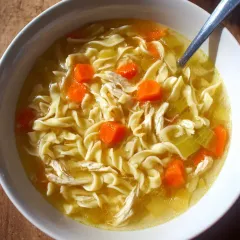

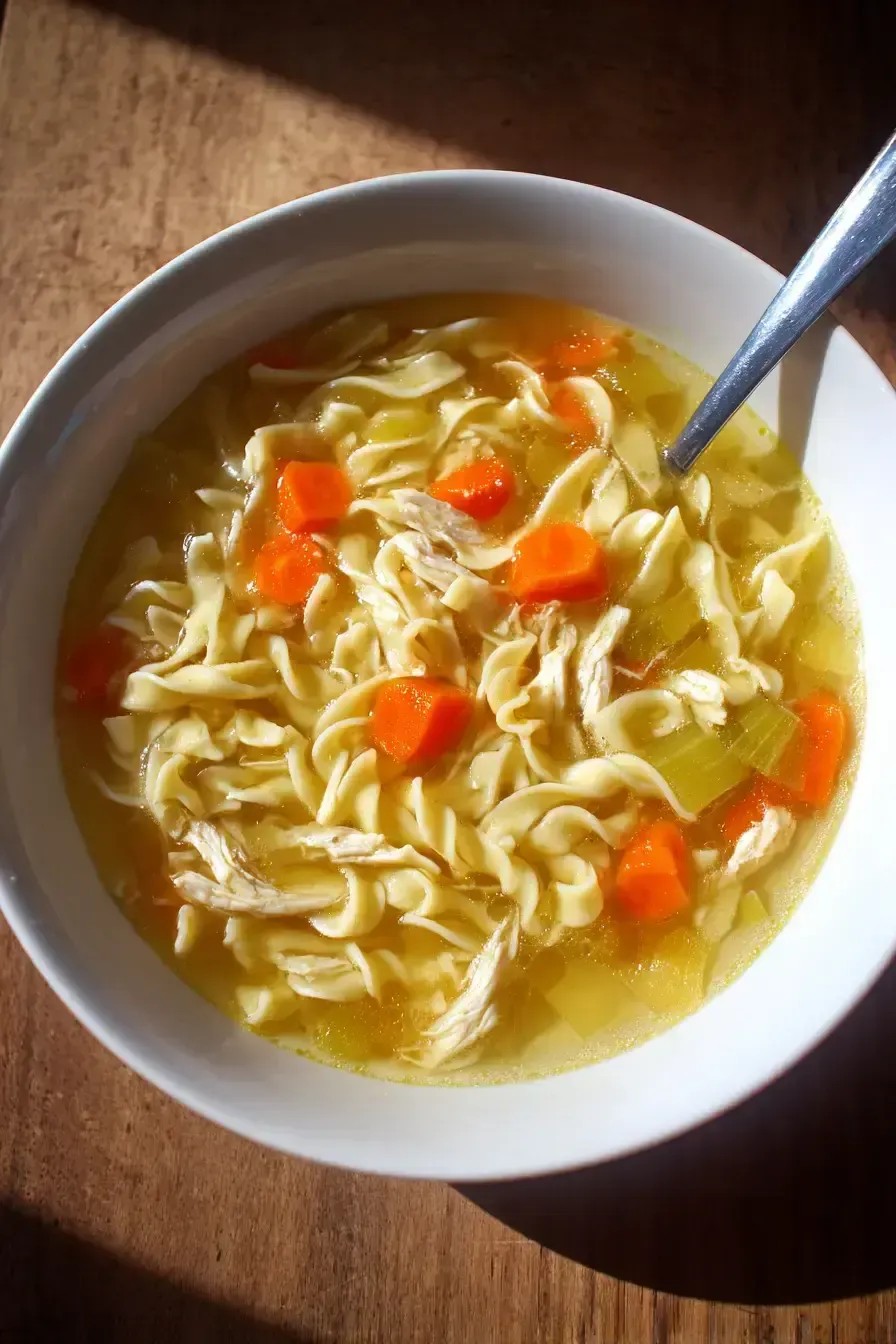
Homemade Egg Noodle Soup is the ultimate flavor bridge between comforting tradition and your modern kitchen. This recipe makes authentic, fresh egg noodles from scratch surprisingly simple, using ingredients you likely have on hand. You’ll love the rich, hearty chicken soup base and the incredible satisfaction of making your own pasta.
You’ll Savor Every Spoonful
- Fresh Noodle Magic – Discover the simple joy of making egg noodles from scratch, which taste infinitely better than dried.
- Pantry-Friendly & Smart – You only need a few basic ingredients, turning a humble chicken noodle soup into something extraordinary.
- Customizable Comfort – This homemade pasta soup is your canvas; add your favorite veggies or proteins for a new creation every time.
- Weeknight Wonder – From dough to bowl in under an hour, this is an accessible, cozy dinner solution the whole family craves.
Navigation
- From Scratch to Soup in Under an Hour
- Thoughtful Tips for Special Diets
- My Soy-Sauce-Aisle Secrets for Perfect Homemade Egg Noodle Soup
- More Than Just Comfort: The Nourishing Side of Homemade Egg Noodle Soup
- Your Fusion Freedom: Lighter & Allergy-Friendly Twists
- Gathering Around the Bowl: How to Serve Your Homemade Egg Noodle Soup
- Common Mistakes (So Your Homemade Egg Noodle Soup Is Perfect)
- A Soup for Tomorrow: How to Store Your Homemade Egg Noodle Soup
- More Cozy Soup Recipes to Warm Your Soul
- Frequently Asked Questions
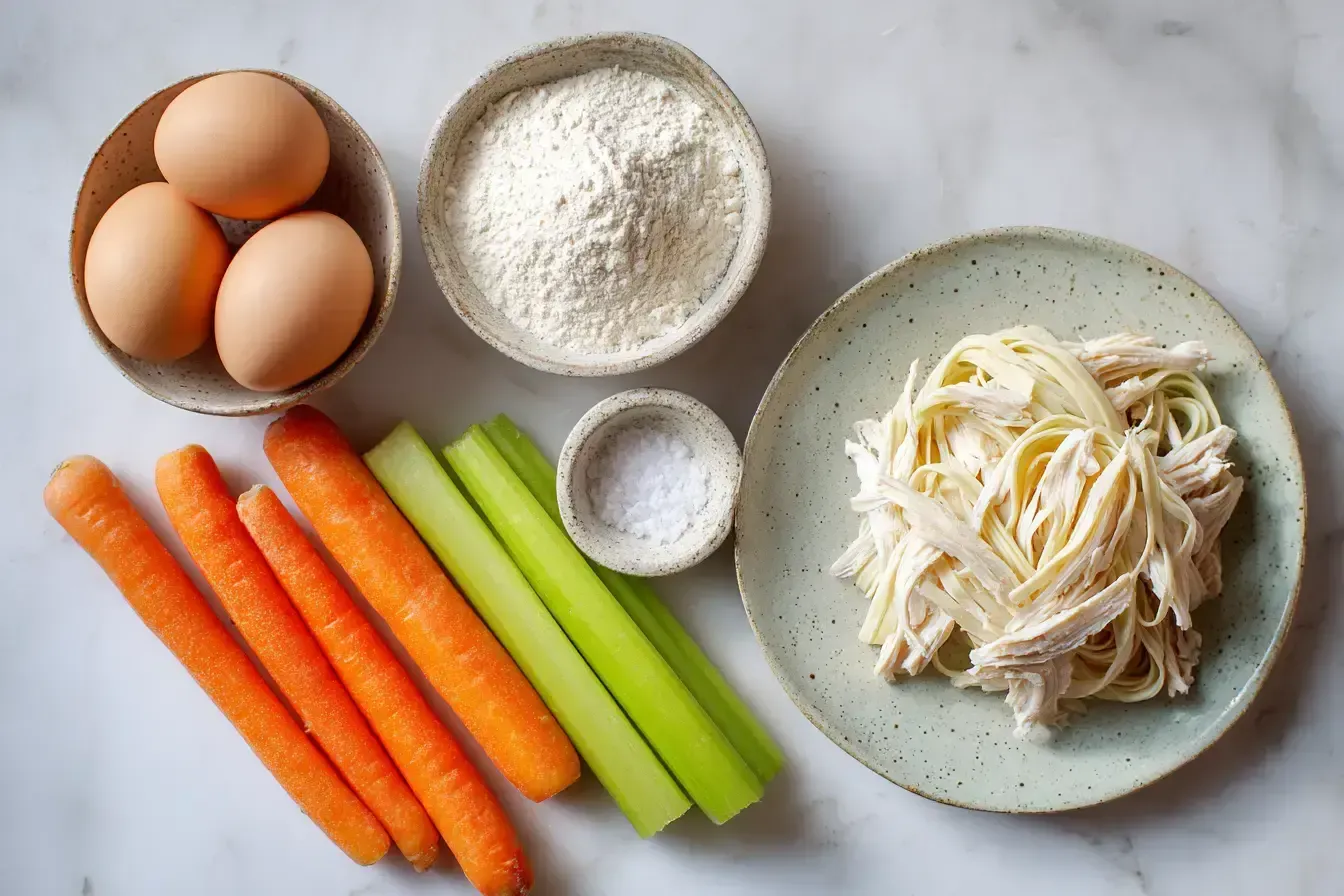
Your Grocery Store Has This: The Homemade Egg Noodle Soup Pantry
For the Fresh Egg Noodles
- 2 large eggs – The rich binder for your dough; room temperature blends more easily.
- 2 cups all-purpose flour – Plus extra for dusting your surface and preventing sticky noodles.
- 1/2 teaspoon kosher salt – Seasons the noodle dough from the inside out.
- 2 tablespoons water – Just enough to bring the stiff dough together perfectly.
For the Hearty Chicken Soup
- 8 cups chicken broth – The flavorful foundation; use a good-quality broth for the best results.
- 2 medium carrots, peeled and sliced – For sweet pops of color and classic soup crunch.
- 2 celery stalks, thinly sliced – Adds an essential, savory aromatic note to the broth.
- 1 cup shredded cooked chicken – A protein-packed addition; use leftover roast chicken or a rotisserie bird.
- 1 tablespoon chopped fresh parsley – The bright, fresh finish that makes all the difference.
- Salt and black pepper to taste – Season in layers for a perfectly balanced homemade egg noodle soup.
From Scratch to Soup in Under an Hour
Let’s talk timing, because I know a comforting noodle soup should feel doable, not daunting. The active prep for this homemade egg noodle soup is just 25 minutes. You’ll spend that time lovingly kneading your dough and prepping fresh veggies.
Then, the cook time is a relaxed 20 minutes. This includes simmering the broth to develop flavor and cooking your fresh noodles to tender perfection. In total, you’re looking at about 45 minutes for a from-scratch masterpiece. It’s the perfect easy family dinner project for a cozy weeknight.
Honestly, the time flies. While the dough rests and the soup simmers, you can tidy up. Compared to other from-scratch projects, this is wonderfully quick. For another quick and soul-warming option, my easy lentil soup is also ready in about the same time.
Thoughtful Tips for Special Diets
I believe good food should be accessible, which means thinking about adaptations. This soup is naturally a great candidate for a diabetic-friendly or low glycemic meal with a few smart swaps. The base is savory, not sweet, and the fresh noodles provide a satisfying chew.
First, focus on portion size for glycemic control. A moderate bowl with plenty of broth, veggies, and lean chicken is key. You can also swap the all-purpose flour for a whole wheat or legume-based blend to increase fiber. For a completely grain-free version, spiralized zucchini or shirataki noodles make a fantastic, glucose-friendly stand-in for the pasta.
My Soy-Sauce-Aisle Secrets for Perfect Homemade Egg Noodle Soup
After making this soup countless times, I’ve gathered a few pro tips to ensure your success every single time. These are the little things that bridge the gap from good to absolutely unforgettable.
Flavor Bridge with Umami: For a deeper, more complex broth, add a teaspoon of soy sauce or a splash of fish sauce when you add the vegetables. It won’t taste Asian, just incredibly savory and rich.
Gluten-Free Adaptation: You can absolutely make gluten-free noodles! Use a 1:1 gluten-free flour blend that contains xanthan gum. The dough may be a bit more delicate to roll, but the result is a wonderfully tender noodle. For a completely different but equally comforting gluten-free soup, try my healing golden lemon lentil soup.
The Perfect Noodle Chew: Don’t skip the dough rest. Those 15 minutes under the towel allow the gluten to relax, making the dough much easier to roll thin without springing back. This is the secret to tender noodles with that ideal slight chew.
Storage Smarts: Store soup and noodles separately if you plan on having leftovers. The fresh noodles will continue to absorb broth and become very soft. Keep them in a sealed container in the fridge for up to 3 days. For more hearty make-ahead ideas, my beef stew is a freezer champion.
More Than Just Comfort: The Nourishing Side of Homemade Egg Noodle Soup
This bowl is a hug for your soul, but it’s also genuinely good for you. By making it from scratch, you control everything that goes in, avoiding the excess sodium and preservatives often found in canned versions. Let’s break down the goodness.
First, the homemade egg noodle soup is a good source of high-quality protein from both the eggs in the dough and the shredded chicken. Protein is essential for keeping you full and supporting muscle repair. The carrots and celery provide vitamin A and vitamin K, along with dietary fiber for digestive health.
Chicken broth itself is rich in minerals like calcium and magnesium. When you make a homemade chicken soup base, you also get the potential benefits of collagen, which is great for skin and joint health. For another nutrient-dense, broth-based option, my potato leek soup is velvety and satisfying. According to health experts at Harvard T.H. Chan School of Public Health, the warm liquids and nutrients in soup can be supportive during cold season.
Your Fusion Freedom: Lighter & Allergy-Friendly Twists
Part of the joy of cooking is making a recipe your own. Want a lighter version or need to avoid an allergen? No problem. Here’s how to adapt this comforting noodle soup to fit your needs perfectly.
For a lower-carb version, you can skip making the noodles and add spiralized zucchini or hearts of palm noodles during the last few minutes of cooking. To reduce sodium, use a low-sodium chicken broth and season generously with herbs at the end. If you’re dairy-free, you’re already in luck—this recipe contains no dairy. For a creamy, vegetable-forward soup that’s naturally light, check out my creamy roasted cauliflower soup.
Gathering Around the Bowl: How to Serve Your Homemade Egg Noodle Soup
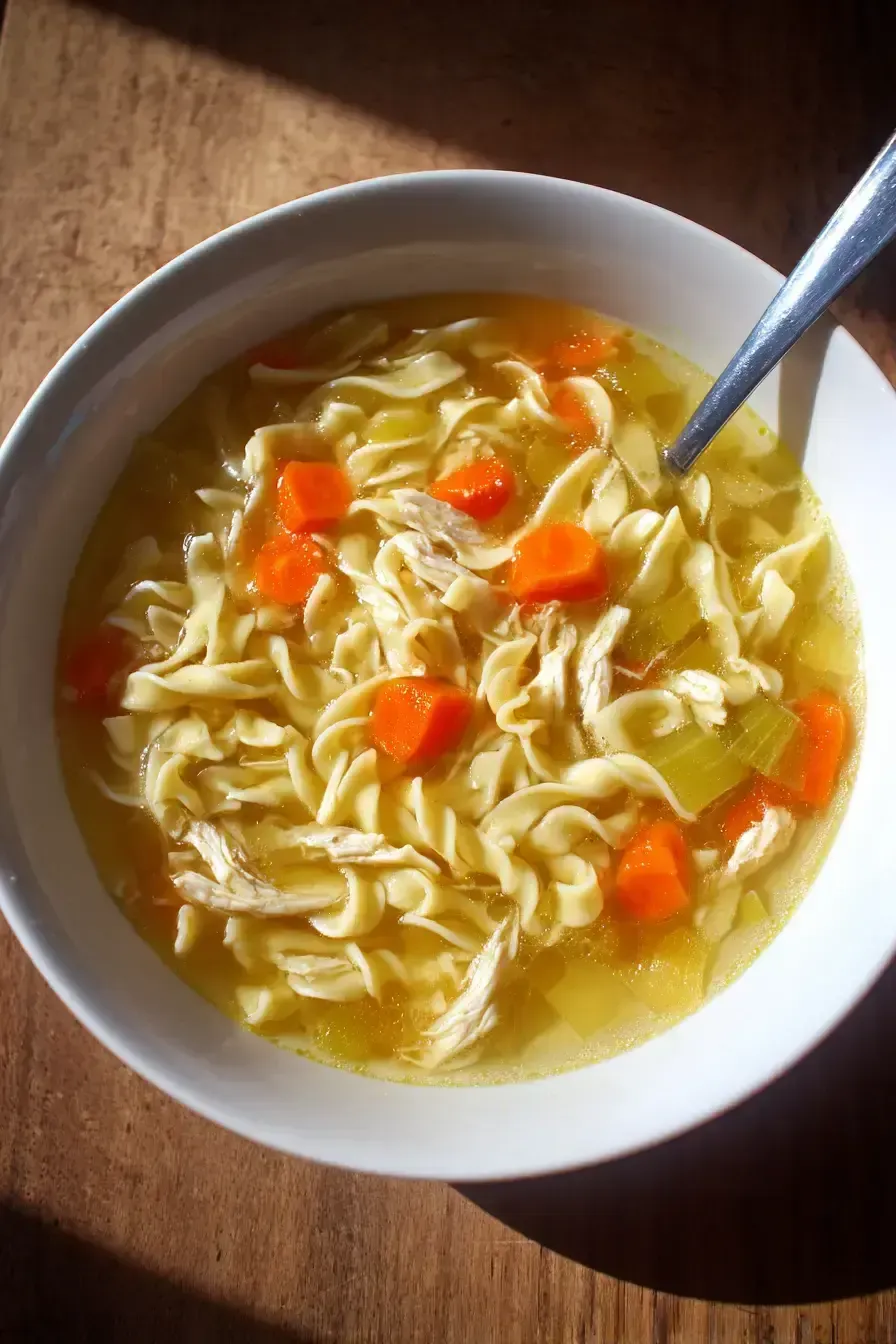
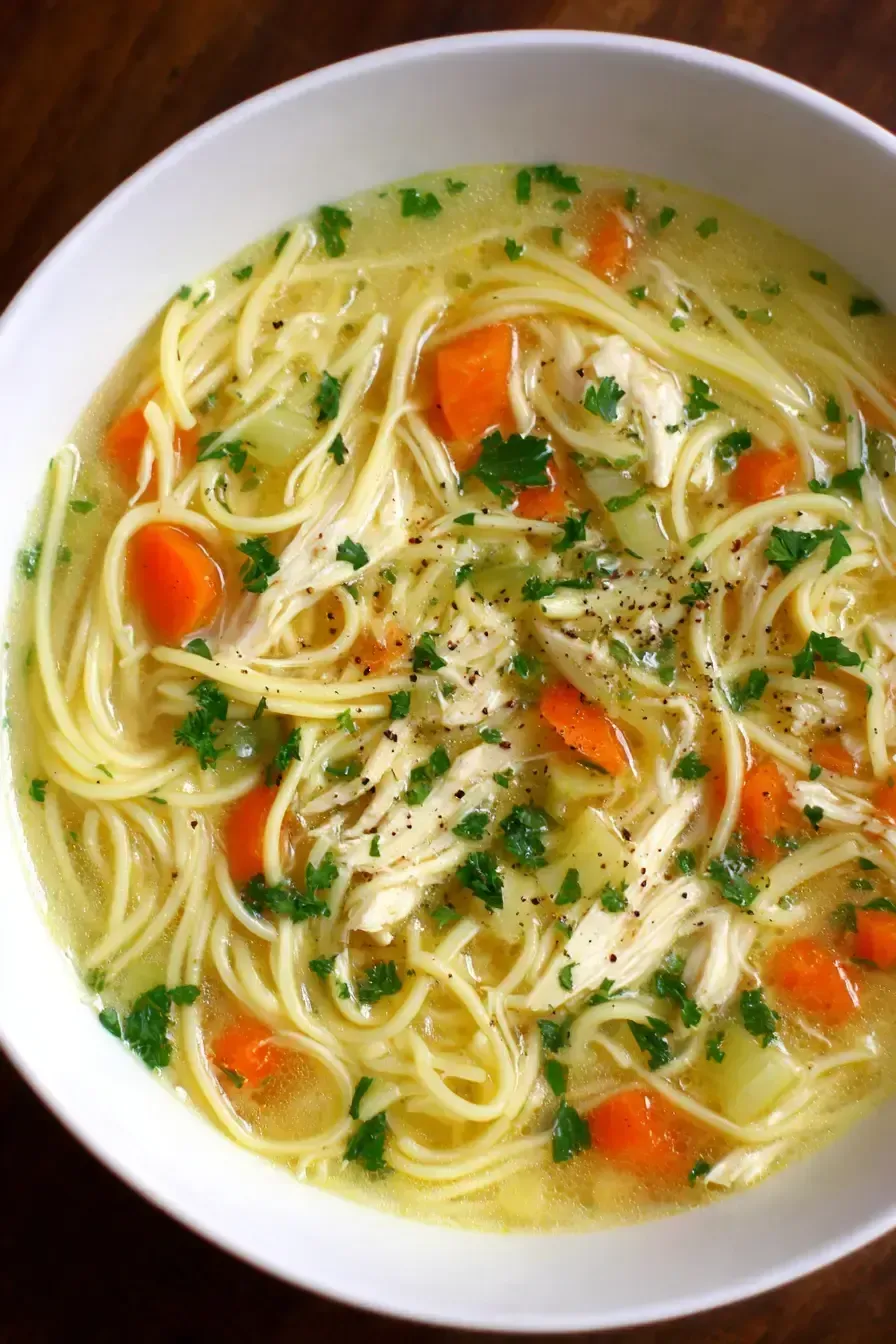
I love the ritual of serving soup. It’s an invitation to slow down. Ladle this steaming homemade egg noodle soup into deep, wide bowls so everyone can see the beautiful carrots, celery, and ribbons of fresh pasta. The aroma alone is pure comfort.
For a complete cozy meal, I love to serve it with a simple side salad with a bright vinaigrette to cut the richness. A crusty piece of bread for dipping is never a wrong choice. For a heartier spread, pair it with a half sandwich. It’s the perfect lunch or light dinner. Speaking of perfect pairings, this soup would be fantastic followed by a slice of my classic chicken pot pie on another night. And if you love this style of chunky, vegetable-packed soup, you must try my vegetable beef soup next.
Common Mistakes (So Your Homemade Egg Noodle Soup Is Perfect)
Even simple recipes have pitfalls. Let’s walk through the common “why is my…” questions so you can avoid them and achieve soup success on your first try.
Why are my noodles tough? This usually means the dough wasn’t kneaded enough or didn’t rest. Knead for a full 5-7 minutes until smooth, and let it rest covered for 15 minutes. This relaxes the gluten for tender noodles.
Why is my soup bland? Season in layers! Salt your noodle dough, and then taste and season the broth again at the very end, after the parsley is added. Broths vary in saltiness. For more flavor-building techniques, see the secrets in my chicken stew.
Why did my noodles absorb all the broth? Fresh noodles are thirsty! If you aren’t serving the soup immediately, or if you plan on having leftovers, cook the noodles separately and add them to each bowl as you serve. Store them apart in the fridge. The Serious Eats soup storage guide has great general tips for this.
Why is my dough too sticky or too dry? Flour humidity varies. If sticky, add a tablespoon more flour while kneading. If dry and crumbly, add water a teaspoon at a time. You want a stiff, but cohesive ball. For another recipe that teaches great dough intuition, try my winter minestrone soup with its rustic bread on the side.
I remember the first time I made pasta from scratch; I was so worried I’d mess it up. But trust me, even slightly imperfect homemade noodles taste a million times better than anything from a box. Embrace the process.
A Soup for Tomorrow: How to Store Your Homemade Egg Noodle Soup
This soup makes me think of my grandma, who always had a container of something wonderful in the fridge “just in case.” To enjoy your homemade egg noodle soup later, let it cool completely first. For the best texture, I strongly recommend storing the soup broth and the cooked noodles in separate airtight containers.
They will keep in the refrigerator for 3-4 days. When ready to eat, reheat the broth portion on the stove until simmering, then add the noodles just to warm through. The noodles can also be frozen: lay them on a parchment-lined sheet to freeze solid, then transfer to a bag. They can go straight from freezer to simmering broth. For a soup that stores and reheats beautifully, my Tuscan white bean soup is another excellent option.
Ready to Build Your Flavor Bridge? Try This Homemade Egg Noodle Soup
I truly hope you give this recipe a try. There’s a unique magic in making your own noodles—the tactile joy of kneading the dough, the pride of rolling it out, and the incredible aroma that fills your kitchen. It turns an ordinary evening into a small celebration of homemade goodness.
This homemade egg noodle soup is more than a meal; it’s a experience. It’s accessible authenticity, proving that from-scratch cooking can be simple and deeply rewarding. So gather your eggs and flour, and let’s make some comfort together. Once you master this cozy classic, explore other comforting bowls like my spicy jalapeno popper chicken soup for a kick, or the luxurious creamy wild rice chicken soup with roasted mushrooms. For a different take on creamy comfort, don’t miss the classic broccoli cheddar soup or the effortless crock pot potato soup.
More Cozy Soup Recipes to Warm Your Soul
If this homemade egg noodle soup hit the spot, you’re probably in the mood for more spoonable comfort. Here are a few more of my favorite recipes to keep the cozy vibes going all season long.
Potato Leek Soup – Velvety, simple, and elegant with a hint of gentle sweetness from the leeks.
Frequently Asked Questions
Can I use store-bought egg noodles instead?
You can, but the experience and texture will be different. Dried store-bought egg noodles will work and turn this into a quicker homemade egg noodle soup. Just add them according to their package directions, usually in the last 5-10 minutes of cooking. The fresh, from-scratch noodles have a superior flavor and delightful chew.
How do I know when the homemade noodles are cooked?
Fresh egg noodles cook quickly! They usually take 5 to 7 minutes in simmering broth. The best way to test is to taste one. It should be tender but still have a slight bite or chew (al dente). They will continue to soften slightly in the hot broth even off the heat.
Can I make the noodle dough ahead of time?
Absolutely. You can make the noodle dough, wrap it tightly in plastic, and refrigerate it for up to 24 hours. Let it sit at room temperature for about 30 minutes before rolling. You can also roll and cut the noodles, toss them generously with flour, and keep them on a sheet pan in the fridge for a few hours before cooking.
What’s the best way to shred chicken for soup?
For easiest shredding, use two forks to pull apart cooled, cooked chicken breast. You can also use the paddle attachment of a stand mixer on low speed for 30 seconds—it shreds it perfectly! A rotisserie chicken is a fantastic time-saver for this homemade egg noodle soup.