
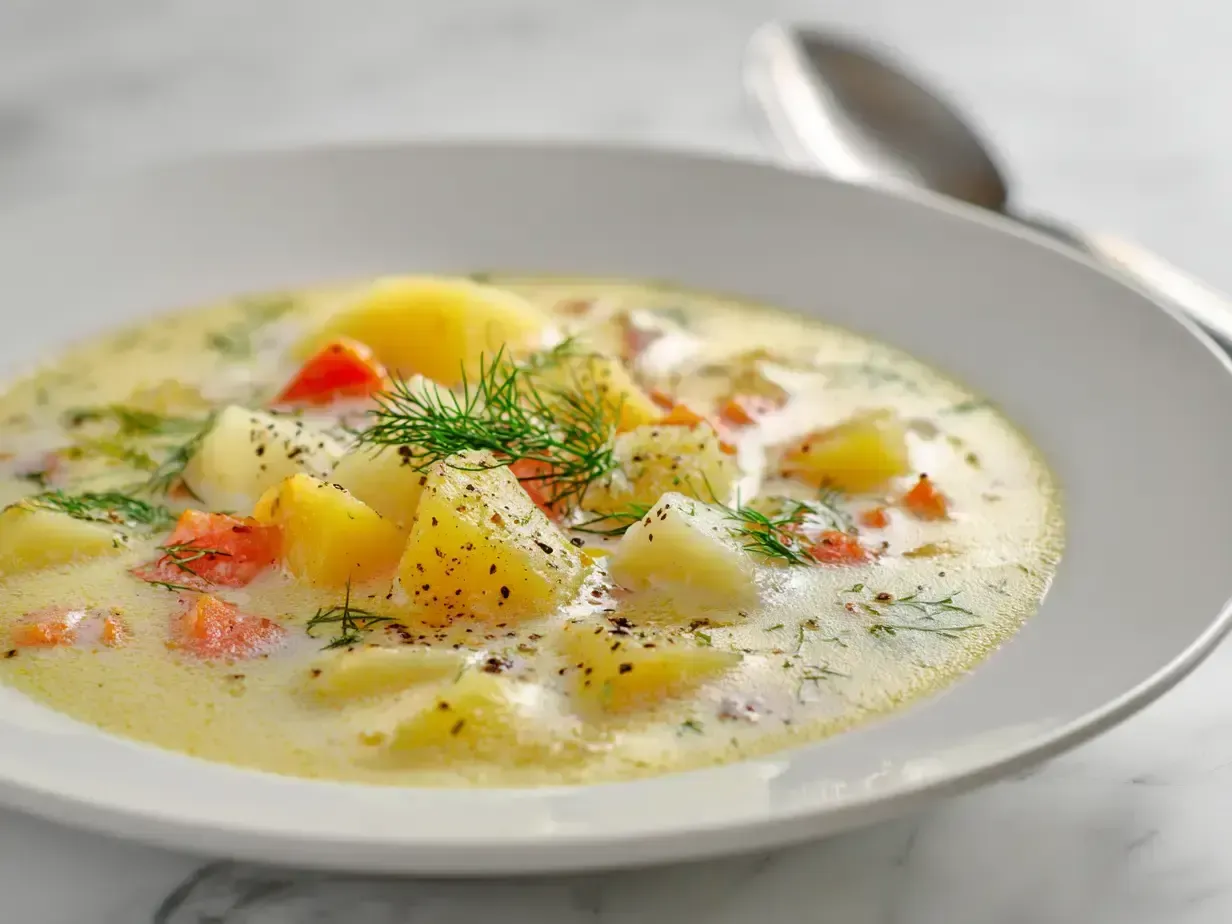
Polish potato soup, known as Kartoflanka, is a beloved traditional dish featuring tender chunks of starchy potatoes slow-cooked with aromatic root vegetables, smoky bacon, and the unmistakable warmth of marjoram. It’s simple, nourishing, deeply satisfying — and on your table in just 40 minutes. Whether you prefer it chunky, mashed, or silky-smooth, this authentic recipe has you covered.
Navigation
Traditional Variations Across Poland
Top Tips for the Best Kartoflanka
What Is Kartoflanka?
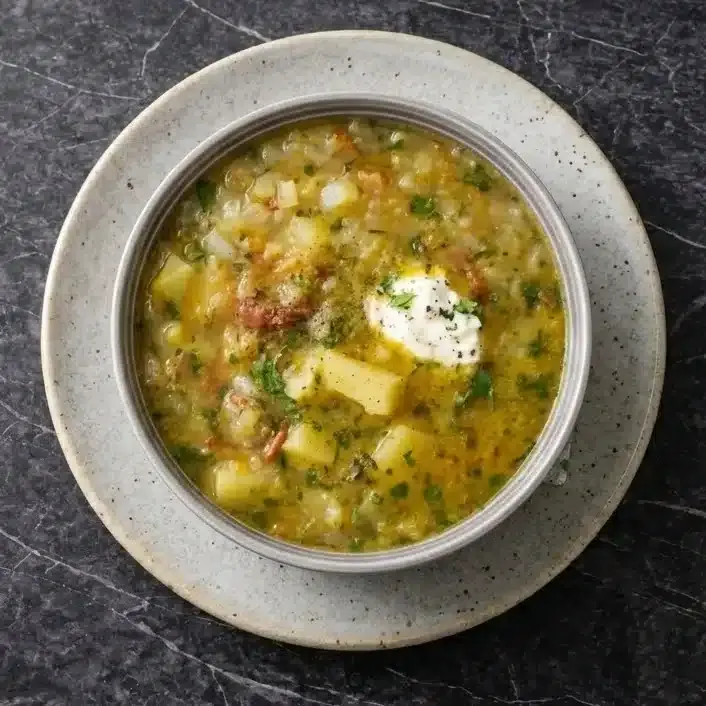
Kartoflanka is Poland’s classic everyday potato soup — a dish rooted in humble, rural cooking where simple pantry staples become something greater than their parts. The word comes from kartofel (potato in Polish), and this soup has been a staple of Polish home kitchens for generations. Unlike heavily blended Western-style potato soups, Kartoflanka is traditionally served with chunks of potato in a golden, aromatic broth, enriched with smoked bacon and finished with fresh flat-leaf parsley.
What makes this soup special is its layered flavor profile: the earthiness of celeriac, the mild anise note of parsley root, the herbal depth of marjoram, and the savory punch of bacon all complement the naturally mild potato beautifully. It’s a dish that rewards simple technique, and if you enjoy other hearty Polish soups like classic chicken soup with vegetables and noodles, you’ll feel right at home here.
Ingredients & Substitutions
Here’s everything you need to make an authentic Polish potato soup, plus smart swaps for harder-to-find ingredients:

- Potatoes: Use all-rounders or starchy varieties — Yukon Gold, Maris Piper, King Edwards, or Russets (see full details below).
- Onion: Yellow or white onion works best; adds a sweet, savory base.
- Leek: Adds gentle, mild onion-like flavor without sharpness.
- Celeriac and parsley root: These are the backbone of the Polish soup vegetable base. If you can’t find parsley root (available in Polish delicatessens), use extra celeriac. Note: parsnip is not a substitute for parsley root — they have a distinct flavor difference.
- Dried herbs: Marjoram is the signature herb in Kartoflanka (also used in traditional żurek soup). A little thyme and allspice round out the flavor.
- Bacon: Smoky, pan-fried streaky bacon is traditional. Substitute with chopped Polish kiełbasa, smoked ribs, or omit entirely for a vegetarian version.
- Vegetable oil and butter: Combined for sautéing — butter adds richness, oil raises the smoke point.
- Fresh flat-leaf parsley: Stirred in at the end for freshness. Fresh dill also works beautifully alongside it.
- Salt and pepper: To taste — season generously, as potatoes absorb a lot of salt.
What Potatoes to Use
The potato you choose directly impacts the texture and flavour of your Kartoflanka. Use all-rounder or starchy/floury potatoes — varieties such as Yukon Gold, white potatoes, Maris Piper, King Edwards, or Russets are all ideal. These potatoes absorb the flavorful broth as they cook, becoming pillowy and tender while still holding their cubed shape just enough to give the soup substance.
Waxy potatoes (commonly used in potato-based meal prep dishes like salads) are too firm and dense — they won’t soften into the soup properly and will leave the broth tasting thin. For the best result, peel and cube your potatoes just before adding them to the pot so they don’t oxidize.
Step-by-Step Instructions
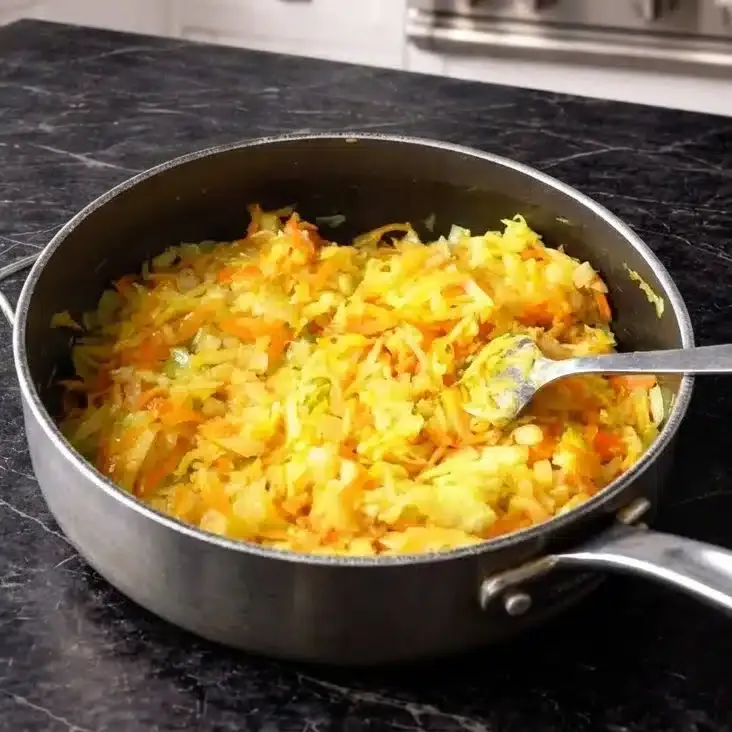
- Make the soup base: Melt the butter along with the oil in a large soup pot. Add the onion, leek, carrot, celeriac, and parsley root. Cook over low-to-medium heat for about 10 minutes, stirring frequently, until all the vegetables are softened and fragrant. Towards the end, stir in the marjoram, thyme, and allspice.
- Add the potatoes: Peel and cube the potatoes into even, bite-sized chunks (roughly 2 cm / ¾ inch). Add them directly to the pot with the sautéed vegetables and stir to combine.
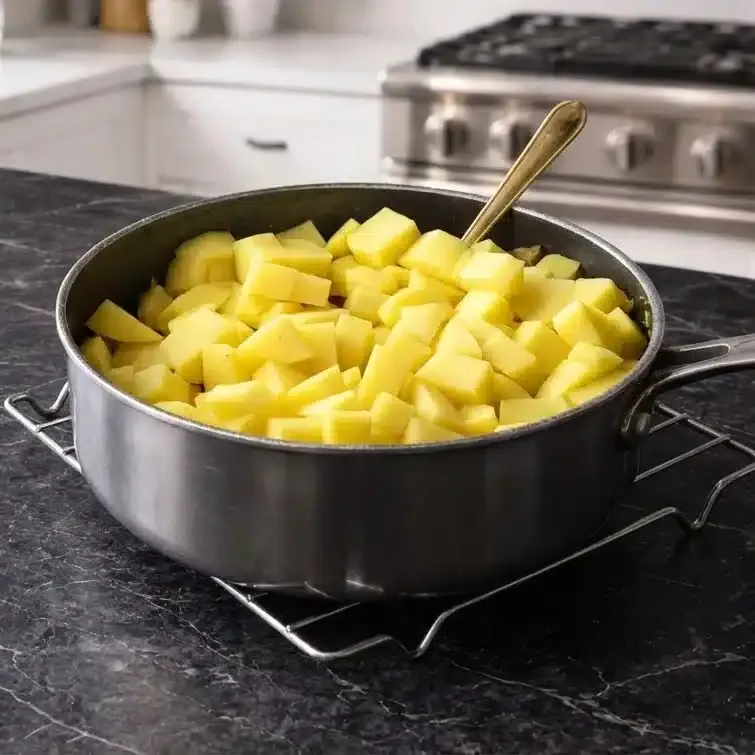
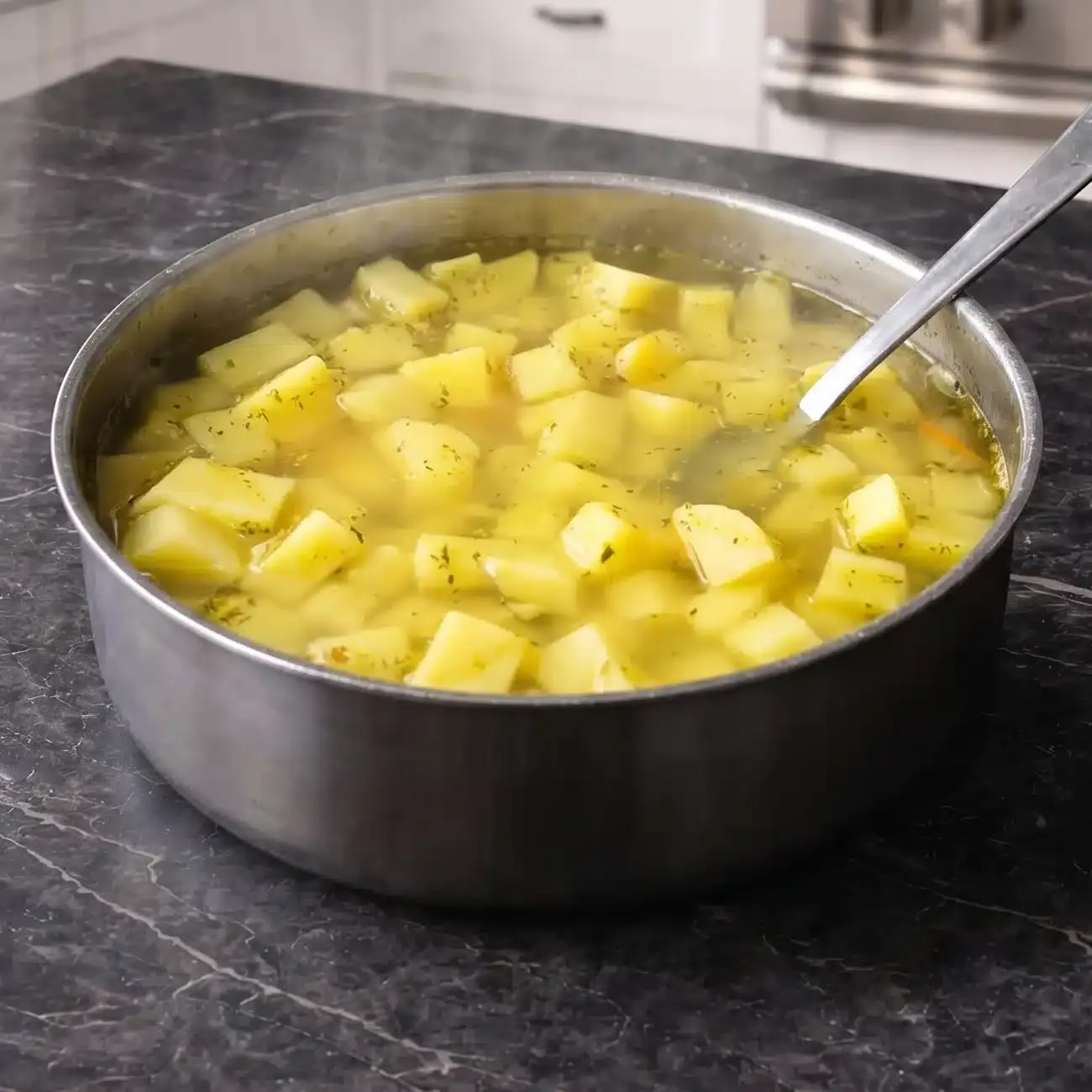
- Add the stock: Pour in hot vegetable or chicken stock. Season with black pepper, cover the pot, and bring to a boil. Reduce heat and simmer gently for about 20 minutes, or until the potatoes are completely tender. Do not overcook — potatoes that start to disintegrate will make the broth starchy and dull.
-
Cook the bacon: While the soup simmers, cook the bacon in a non-stick frying pan over medium heat for several minutes, stirring often, until lightly browned and slightly crispy. Set aside.
-
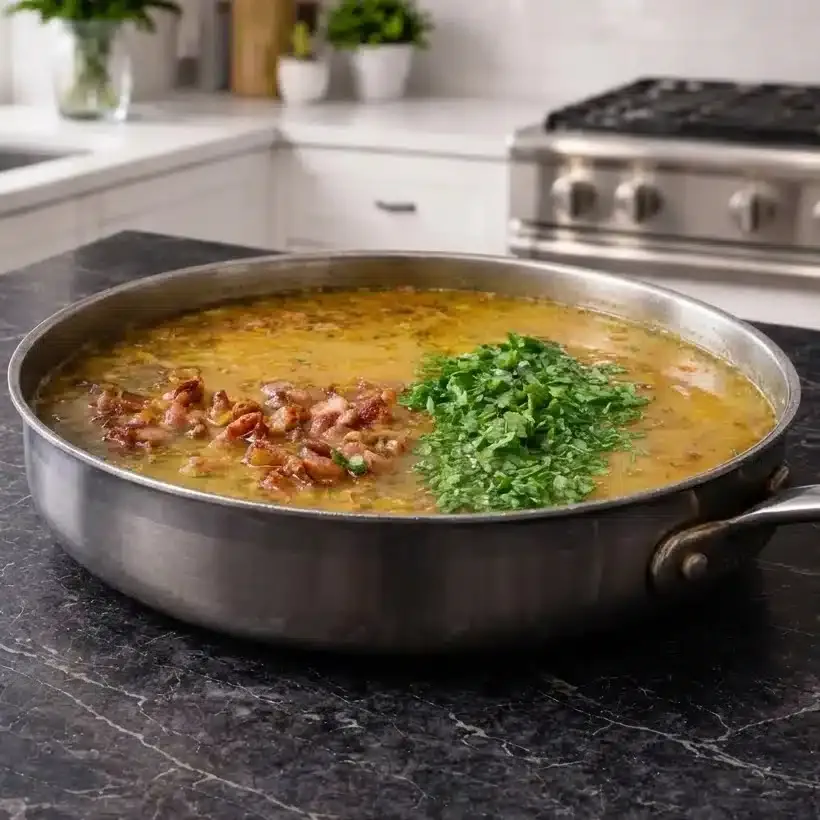
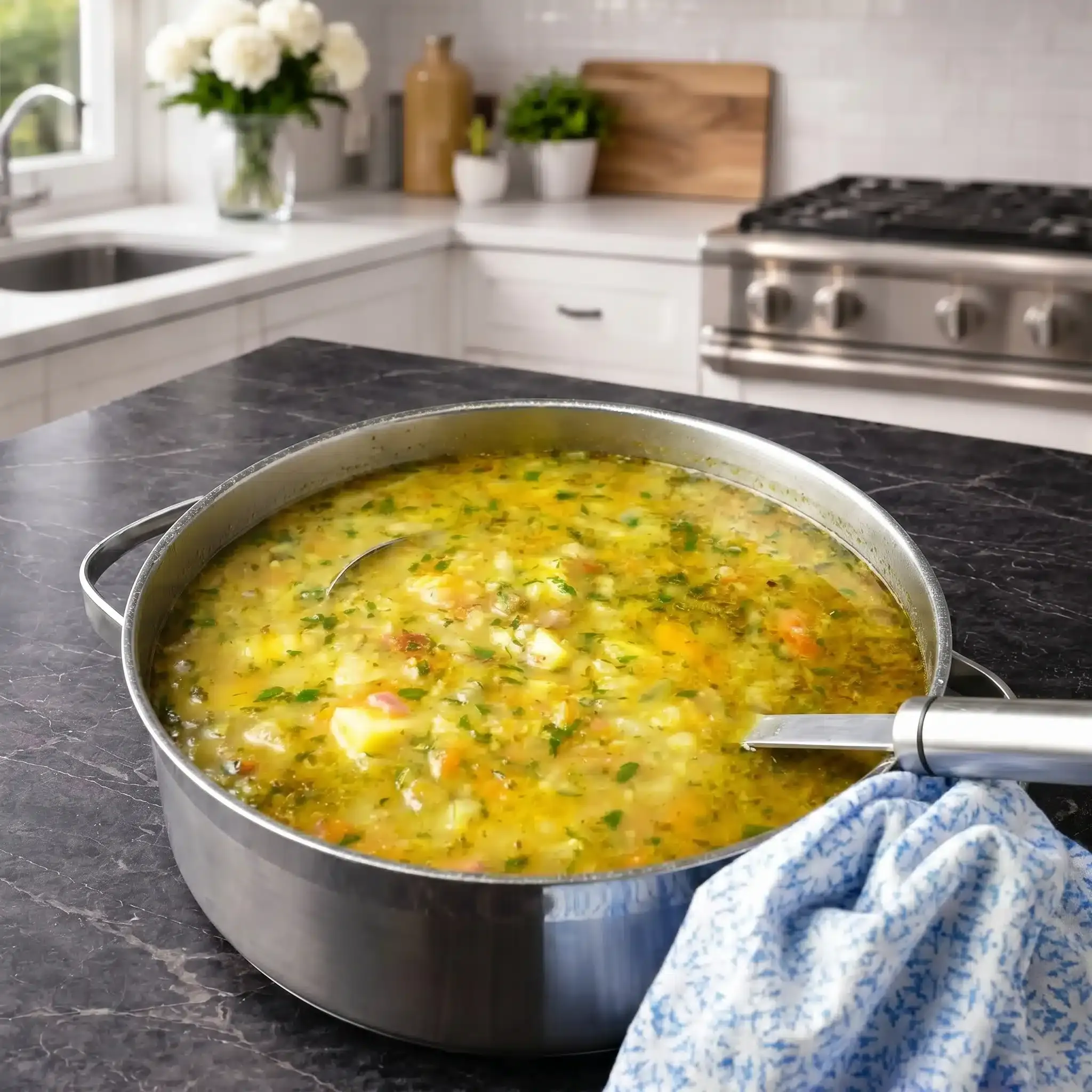
Finish and serve: Add the cooked bacon and fresh flat-leaf parsley to the pot. Stir, and cook for one more minute. Remove from heat. Use a potato masher to roughly mash some of the potato and vegetables directly in the pot — this naturally thickens the soup while keeping pleasing chunks throughout. Taste and adjust seasoning before serving.
How to Adjust the Texture
One of the best things about Kartoflanka is how flexible it is. Here are four ways to serve it, from most to least traditional:
- Chunky (most traditional): Serve as-is with visible chunks of potato and vegetables in a clear, flavorful broth.
- Partly mashed (recommended): Use a potato masher directly in the pot to crush some — but not all — of the potatoes. This creates a naturally thick, creamy broth while keeping satisfying texture. This is the method used in this recipe, and a similar technique works well in hearty lentil vegetable soup too.
- Partially blended: Remove some of the cooked vegetables with a slotted spoon, blend the remaining soup until smooth, then return the reserved vegetables. Add the bacon and parsley and serve.
- Fully blended (less traditional): Blend the entire soup until completely smooth, then stir in bacon and parsley before serving.
- Tip: Even if you prefer a creamier consistency, never overcook the potatoes to the point where they begin disintegrating before you mash or blend — this makes the texture gluey rather than silky.
Serving Suggestions
Polish Kartoflanka is a complete meal on its own, but a few simple additions elevate it further. Serve with a dollop of sour cream or a swirl of heavy cream stirred in just before eating — this adds richness and a pleasant tang that balances the savory broth. A thick slice of pumpernickel or dark rye bread alongside is the most traditional accompaniment. For a lighter weekday meal, pair it with a simple green salad or enjoy it as a starter before a heartier main, much like you might serve a bowl of warming broccoli cheddar soup.
Traditional Variations Across Poland
Like many beloved regional dishes, Kartoflanka varies subtly across Poland’s different provinces. Here are some authentic additions you’ll find in traditional recipes:
- Caraway seeds and bay leaf: Common additions for extra herbal warmth.
- Sauerkraut: Regional varieties — particularly from central Poland — include fermented cabbage, making the soup tangy and similar in spirit to traditional Polish sauerkraut soup (kapuśniak).
- Wild mushrooms: A prized ingredient in Polish cooking, dried or fresh wild mushrooms add an earthy, umami depth. See also traditional nourishing soup recipes for inspiration on building depth with simple ingredients.
- Garlic: Often added for extra savory punch. Omit if using smoked kiełbasa, which typically already contains garlic.
- Smoked cheese (oscypek): A regional specialty of the Tatra mountain areas in southern Poland, crumbled or melted into the soup just before serving.
- Flour thickener: Some cooks dissolve 2 teaspoons of plain flour in 2 tablespoons of cold water and stir into the soup alongside the bacon and parsley, simmering for 2 more minutes. Only use this method if you are not pureeing the soup.
Frequently Asked Questions
What is the difference between Kartoflanka and Zupa Ziemniaczana?
Both names refer to Polish potato soup. Kartoflanka is the more colloquial, regional term (used mainly in northern and central Poland), while Zupa Ziemniaczana literally translates to “potato soup” and is the more formal, widely used name. The recipes are nearly identical — both feature potatoes, root vegetables, smoked meat, and marjoram as core elements.
Can I make Kartoflanka vegetarian?
Yes, absolutely. Simply omit the bacon and use a well-seasoned vegetable stock. The soup remains full of flavor thanks to the celeriac, parsley root, leek, and marjoram. You can also add a handful of dried wild mushrooms to the pot for a smoky, umami-rich substitute for the bacon.
Can I freeze Polish potato soup?
Yes — Kartoflanka freezes well for up to 3 months. For best results, freeze the soup without cream or sour cream added (stir those in after reheating). Allow to cool completely before portioning into freezer-safe containers. Defrost overnight in the fridge and reheat gently on the stovetop, adding a splash of stock or water if needed to loosen the consistency. If you enjoy batch-cooking soups, hearty vegetable beef soup is another great candidate for the freezer.
Why does my Polish potato soup taste bland?
Potatoes are naturally mild and absorb a lot of salt, so under-seasoning is the most common culprit. Make sure to season the soup generously with salt and pepper, and use a good-quality, well-seasoned stock rather than plain water. The marjoram and allspice are also essential — don’t skip them, as they provide the characteristic flavor that makes this soup unmistakably Polish.
Top Tips for the Best Kartoflanka
- Choose the right potato: All-rounders or starchy varieties only — Yukon Gold, Maris Piper, King Edwards, or Russets.
- Don’t overcook: Simmer until potatoes are just tender. Overcooked potatoes turn gluey and dull the broth.
- Use fresh herbs at the end: Add flat-leaf parsley (and optionally dill) only in the final minute of cooking to preserve their brightness.
- Adjust texture to preference: Chunky, mashed, partially blended, or fully blended — all are valid. See the texture section above for guidance.
- Storage: Refrigerate for up to 4 days or freeze for up to 3 months. Best served hot.
- Serving upgrade: A spoonful of sour cream and a slice of dark rye bread transforms a simple bowl into a proper Polish meal.