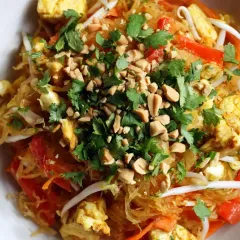

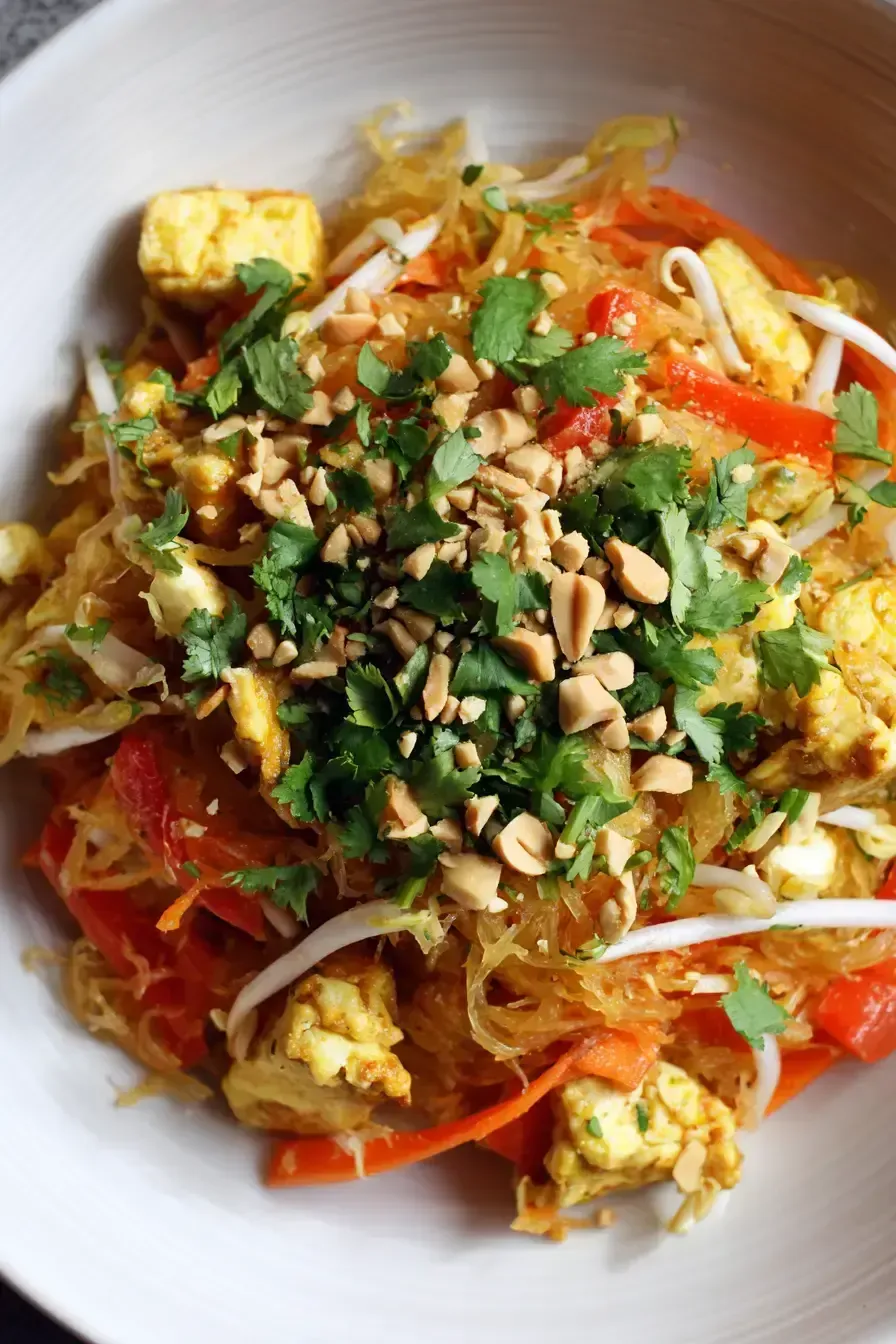
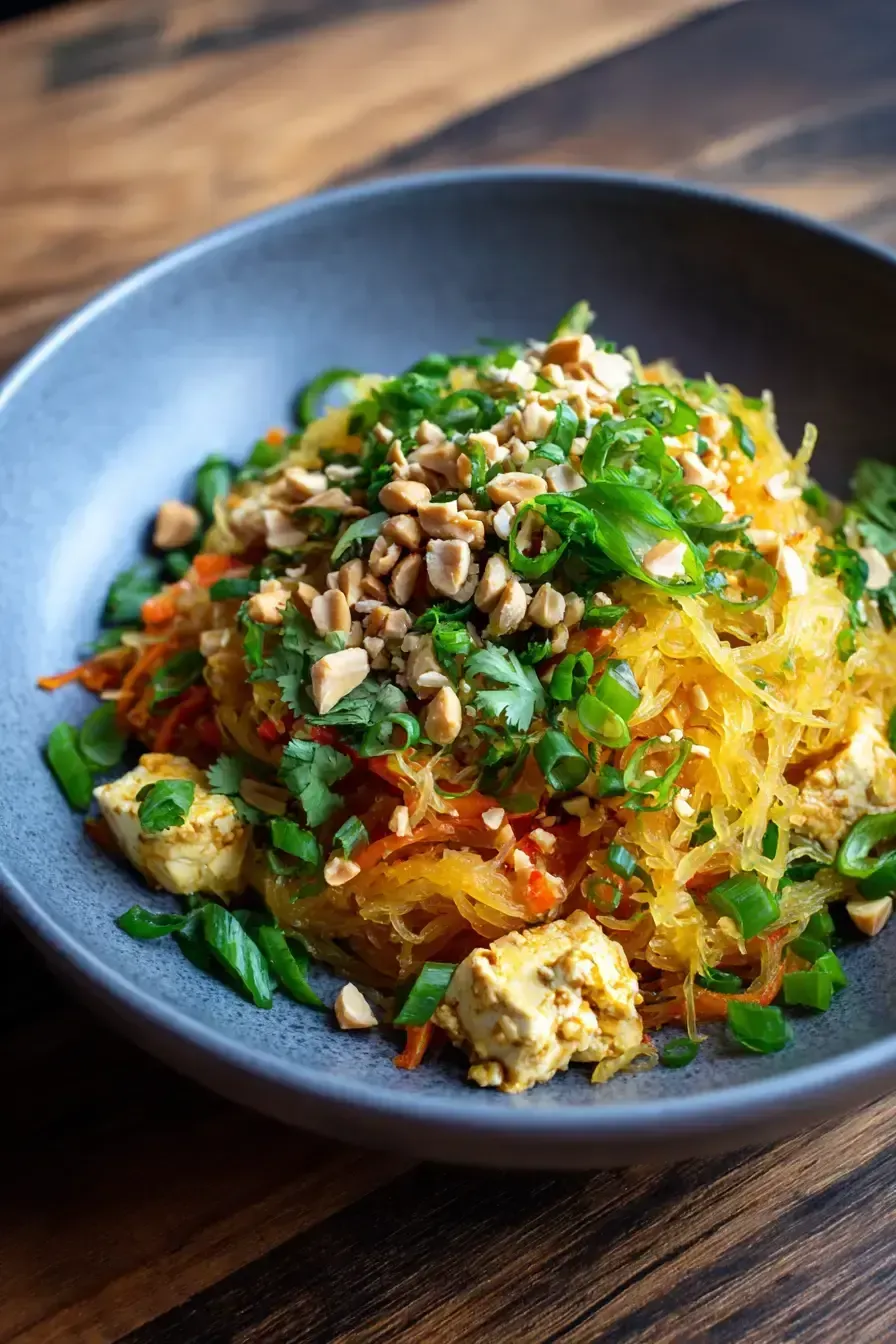
Craving the bold flavors of takeout but want a lighter, veggie-packed meal? This Spaghetti Squash Pad Thai is your tested and true solution. I’ve spent hours in my kitchen perfecting this honest shortcut, swapping traditional noodles for roasted spaghetti squash to create a healthy Pad Thai recipe that respects your time and your taste buds. You get all the sweet, savory, and tangy notes you love in a low-carb Thai food masterpiece ready in about an hour.
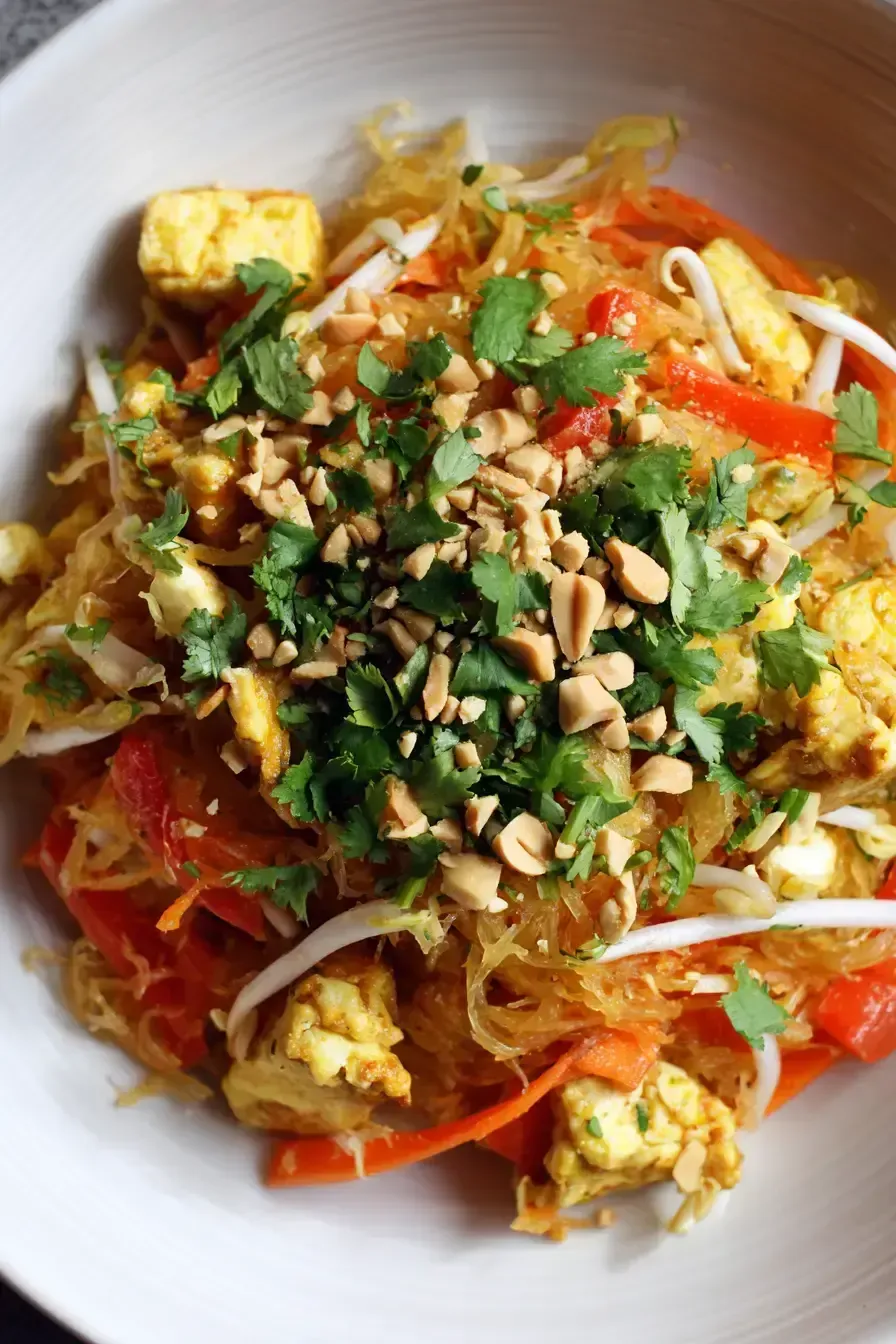
Tested Shortcuts You’ll Love
- Authentic Flavor, Lighter Body – The creamy peanut sauce delivers classic Pad Thai taste without the heavy, starchy feel.
- Gluten-Free & Low-Carb Friendly – Spaghetti squash noodles make this a naturally gluten-free Pad Thai that fits various diets.
- One-Skillet Wonder – After roasting the squash, everything comes together in one pan for minimal cleanup.
- Protein-Packed & Satisfying – Tofu Pad Thai provides plant-based protein that keeps you full for hours.
Navigation
- Your Time-Respecting Game Plan
- Thoughtful Tips for Special Diets
- My Tested-and-True Pro Tips
- Why This Dish Feels as Good as It Tastes
- Customize Your Perfect Plate
- Serving Your Masterpiece with Flair
- Common Pitfalls and How to Sidestep Them
- Keeping Your Leftovers Tasty
- More Cozy & Flavor-Packed Dinners You’ll Adore
- Frequently Asked Questions
What You’ll Need for This Honest Shortcut
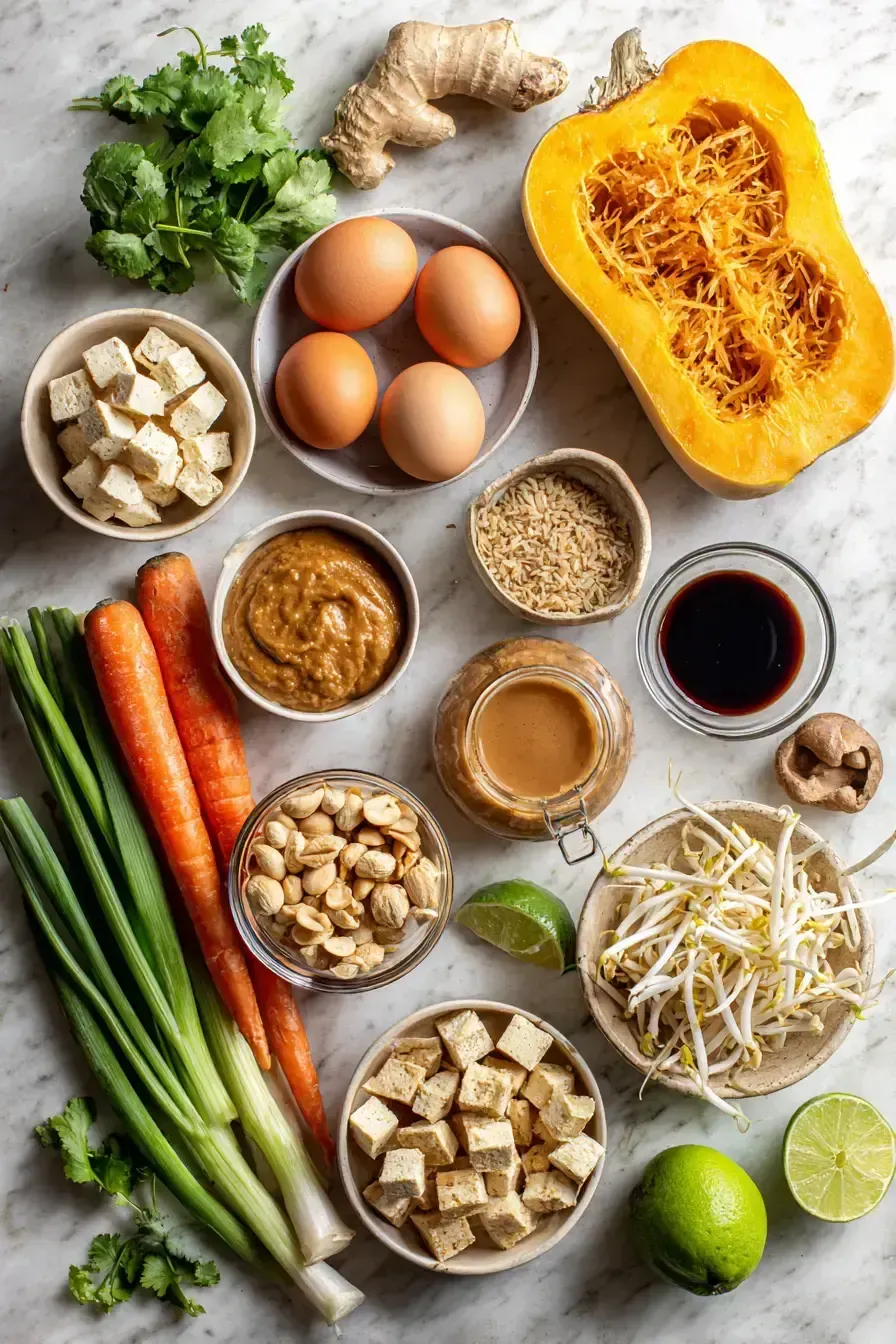
Gathering your ingredients is the first step to a successful meal. Here’s everything you need, broken down by component. I always recommend prepping everything before you start cooking. This simple habit saves you so much time and stress during the active cooking phase.
For the Squash & Base
- 1 medium spaghetti squash – Creates the perfect healthy, gluten-free noodle substitute.
- 2 tablespoons olive oil – For roasting the squash to tender perfection.
- 1/4 teaspoon salt – Enhances the natural flavor of the squash.
- 1 tablespoon vegetable oil – For sautéing the tofu and veggies.
For the Protein & Sauce
- 8 ounces firm tofu, cubed – Press it well to absorb the sauce beautifully.
- 2 large eggs – Adds classic texture and extra protein.
- 1/4 cup creamy peanut butter – The base for that rich, authentic sauce.
- 3 tablespoons low-sodium soy sauce – Provides savory umami depth.
- 2 tablespoons fresh lime juice – Essential for the signature tangy brightness.
- 1 tablespoon brown sugar – Balances the acidity with a touch of sweetness.
- 1 teaspoon sriracha sauce – Adds a customizable layer of heat.
For the Veggies & Garnish
- 2 cloves garlic, minced – The aromatic foundation for the stir-fry.
- 1 cup bean sprouts – Delivers that essential fresh crunch.
- 1/2 cup shredded carrots – Adds color, sweetness, and more texture.
- 2 green onions, sliced – For a mild, fresh onion flavor.
- 1/4 cup chopped peanuts – The perfect crunchy, salty garnish.
- Fresh cilantro – A bright, herbaceous finish (optional but recommended).
Your Time-Respecting Game Plan
Let’s talk timing honestly. This Spaghetti Squash Pad Thai takes about 60 minutes from start to finish, with 20 minutes of active prep and 40 minutes of mostly hands-off cook time. I know an hour might sound like a lot for a weeknight, but here’s the transparent efficiency: roasting the squash is passive.
You can prep your sauce, tofu, and veggies while it’s in the oven. Then, the final stir-fry comes together in under 10 minutes. Compared to ordering takeout, you’re investing the same amount of time for a far healthier result. For more hands-off roasting techniques, check out my complete guide for perfect roasted spaghetti squash.
Thoughtful Tips for Special Diets
As a shortcut tester who values inclusivity, I always look for easy tweaks. This vegetarian Pad Thai is naturally gluten-free and can easily be adapted for more sugar-conscious or low glycemic eating. The key is in the sauce and your choice of garnishes.
First, for a diabetic-friendly version, swap the brown sugar in the sauce for a granulated sugar alternative like monk fruit or stevia that measures 1:1 like sugar. You can also simply reduce or omit it, relying on the natural sweetness of the carrots. Second, be mindful of portion sizes with the chopped peanut garnish, as nuts are energy-dense. A light sprinkle adds crunch without overdoing it.
My Tested-and-True Pro Tips
After making this dozens of times, I’ve nailed down the tweaks that make a real difference. These are the honest time-savers and flavor-boosters that separate a good dish from a great one. Let me share my top findings with you.
Flavor Swap: No peanut butter? Use almond butter or sunflower seed butter for a different but equally delicious nutty base. For a totally different flavor profile, try my creamy pesto pasta which uses a similar technique with herbs.
Diet Tweak: To make this vegan, simply omit the eggs or scramble a firm tofu block with a pinch of turmeric for color. The texture will still be fantastic.
Prep/Texture Fix: The single most important step? Pressing your tofu. Wrap the cubed tofu in paper towels and place a heavy pan on top for 10 minutes. This removes water so it browns beautifully instead of steaming.
Storage/Reheat Tip: Leftovers keep well for 3 days but the bean sprouts will lose their crunch. For meal prep, store the sauce separately and add fresh sprouts and peanuts when you reheat. This keeps the texture perfect. For another great make-ahead meal, explore my sticky chicken rice bowls.
Why This Dish Feels as Good as It Tastes
This isn’t just about cutting calories. It’s about nourishing your body with vibrant, whole foods. Swapping regular noodles for spaghetti squash noodles is a game-changer. You’re trading refined carbs for a vegetable rich in fiber, vitamins, and minerals.
Let’s break it down. Spaghetti squash is lower in calories and carbohydrates than traditional rice noodles, making this a fantastic low-carb Thai food option. It’s also a good source of fiber, which aids digestion and helps you feel satisfied. The tofu provides plant-based protein and essential minerals like calcium and iron. For another nutrient-dense, veggie-forward dish, my vegan zucchini carrot pasta is a must-try. The healthy fats from the peanut butter support nutrient absorption and add richness. According to the Harvard T.H. Chan School of Public Health, peanuts and peanut butter can be part of a healthy diet. Finally, the array of fresh vegetables boosts your intake of antioxidants. It’s a complete, balanced meal in one skillet.
Customize Your Perfect Plate
This recipe is a wonderfully flexible template. Think of it as your canvas. Want it lighter? Use a low-sodium soy sauce and reduce the peanut butter by a tablespoon, thinning the sauce with a splash of water. Need more protein? Add shrimp or shredded chicken with the tofu.
For a nut-free version, use sunflower seed butter or tahini. If you’re avoiding soy, coconut aminos are a great substitute. The goal is to make it work for you. For a completely different creamy pasta experience without nuts or soy, my vegan spinach alfredo is a fantastic option.
Serving Your Masterpiece with Flair
I love serving this straight from the skillet at the table—it feels so communal and inviting. The vibrant colors of the orange carrots, green onions, and fresh herbs make it visually stunning with zero extra effort. It’s a dish that promises a fun, flavorful experience.
For a complete Thai-inspired feast, start with a light, crunchy salad like my Thai mango cucumber salad. It’s the perfect refreshing contrast to the savory, rich noodles. For a heartier side, a simple bowl of jasmine rice works, or keep it low-carb with extra steamed veggies. I also love serving these noodles in lettuce cups for a fun, hands-on appetizer, similar to my vegan Thai wraps. Don’t forget extra lime wedges and sriracha on the side for everyone to customize their bowl!
Common Pitfalls and How to Sidestep Them
I’ve made the mistakes so you don’t have to. Let’s tackle the most common issues head-on, transforming potential frustrations into guaranteed success. These tips are your secret weapon for perfect results every single time.
“Why is my squash watery?” This usually happens if you don’t roast it cut-side down. Placing the halves face-down on the baking sheet allows steam to escape and concentrates the flavor, yielding perfect, dry strands.
“How do I prevent soggy tofu?” Skipping the pressing step is the main culprit. Take the time to press out the moisture. For more on mastering plant-based proteins, the techniques in my sweet and spicy Thai chicken apply to tofu as well. Also, ensure your skillet is nice and hot before adding the oil and tofu.
“My sauce is too thick/clumpy.” Whisk the peanut butter sauce ingredients thoroughly in a separate bowl before adding it to the hot pan. If it’s still too thick, add a tablespoon of warm water at a time until it reaches a pourable consistency. For more sauce mastery, see how I build flavor in my chicken lo mein.
“The dish lacks the ‘restaurant’ taste.” The secret is fresh lime juice. Don’t use bottled. That final squeeze of fresh lime right before serving brightens every other flavor. Also, don’t skimp on the garnish—the peanuts and cilantro are essential for texture and freshness. For deeper insights into building complex flavors, Serious Eats explores traditional Pad Thai techniques that inspire this healthier version.
I remember the first time I made this for friends who were skeptical about “healthy” swaps. The moment they took a bite and their eyes lit up, I knew this shortcut was a keeper. It’s that moment of surprised delight that makes testing recipes so rewarding.
Keeping Your Leftovers Tasty
This dish stores surprisingly well, making it a fantastic option for meal prep. I often make a double batch to have ready-to-go lunches that taste even better the next day as the flavors meld. Here’s how to keep it at its best.
Let the Spaghetti Squash Pad Thai cool completely before transferring it to an airtight container. It will keep in the refrigerator for 3-4 days. To reheat, I prefer using a skillet over medium heat with a tiny splash of water or broth to refresh the sauce. The microwave can work in a pinch, but may make the squash a bit soggier. Unfortunately, I don’t recommend freezing this one, as the squash and bean sprouts become too watery upon thawing. For a freezer-friendly meal with similar convenience, try my freezer-friendly creamy pasta.
Your Next Cozy Kitchen Adventure Awaits
I truly hope you give this recipe a try. It represents everything I believe in: honest shortcuts that don’t sacrifice quality, meals that respect your time and your health, and the pure joy of creating something delicious from scratch. This Spaghetti Squash Pad Thai has become a regular in my own meal rotation because it simply works.
It’s satisfying, packed with vegetables, and proves that healthy eating can be incredibly flavorful. If you’re looking for more weeknight inspiration that follows this same philosophy, I have plenty of ideas. For a different take on quick noodles, my simple chow mein is a classic. If you love the sweet and savory balance, pineapple fried rice is a family favorite. And for another bowl meal that’s big on flavor, you can’t go wrong with my honey lime chicken rice bowls or my vibrant street corn chicken rice bowls. So, tie on your apron and get ready to make a vegetarian Pad Thai that will earn a permanent spot in your recipe box.
More Cozy & Flavor-Packed Dinners You’ll Adore
If this recipe sparked your joy for vibrant, healthy meals, you’re in the right place. Here are a few more of my tested-and-true favorites that balance big flavor with smart shortcuts.
Garlicky Greens Pasta – A lightning-fast weeknight dish that turns simple greens into a luxurious, savory sauce.
Frequently Asked Questions
Can I make Spaghetti Squash Pad Thai ahead of time?
Absolutely. You can roast the spaghetti squash and prep the sauce up to 2 days in advance. Store them separately in the fridge. When ready to eat, quickly stir-fry the tofu and veggies, then add the pre-cooked squash and sauce to heat through. This cuts your active cooking time in half.
What can I use instead of tofu in this recipe?
Shredded chicken, shrimp, or even thinly sliced steak are excellent protein swaps. For a plant-based alternative, try chickpeas or edamame. The key is to adjust the cook time accordingly. Chicken or shrimp will cook in just 5-7 minutes, while chickpeas just need to be warmed through.
How do I know when my spaghetti squash is fully cooked?
The squash is ready when the outer skin is easily pierced with a fork and gives slightly when pressed. You should be able to effortlessly scrape the flesh into long, spaghetti-like strands with a fork. Undercooked squash will be crunchy and difficult to shred.
Is this Pad Thai recipe gluten-free?
Yes, this is a naturally gluten-free Pad Thai. Just ensure you use a certified gluten-free soy sauce or tamari. All other ingredients, including the spaghetti squash noodles, tofu, and peanut butter, are naturally free from gluten, making this a safe and delicious option for those with sensitivities.