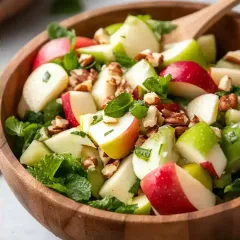

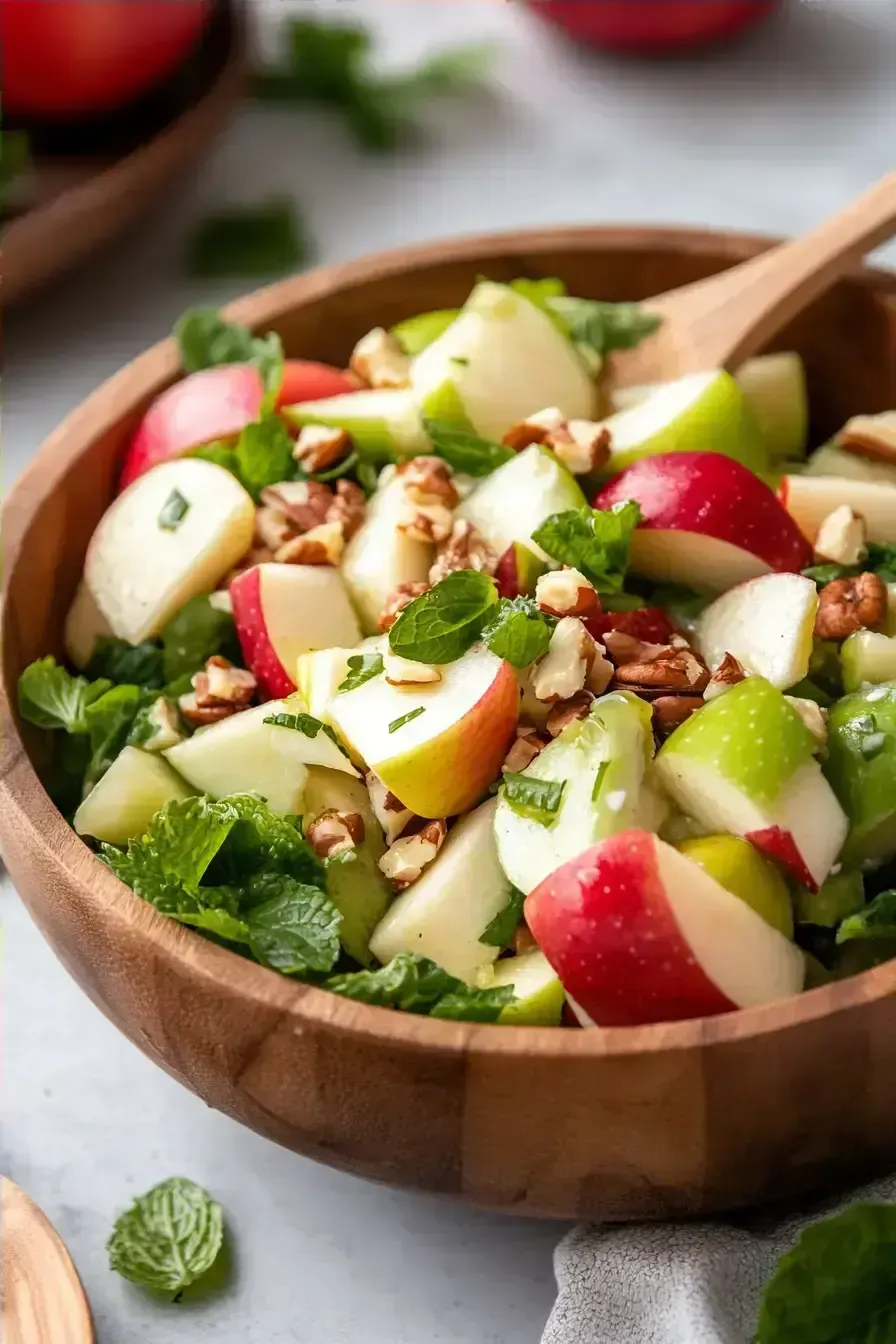
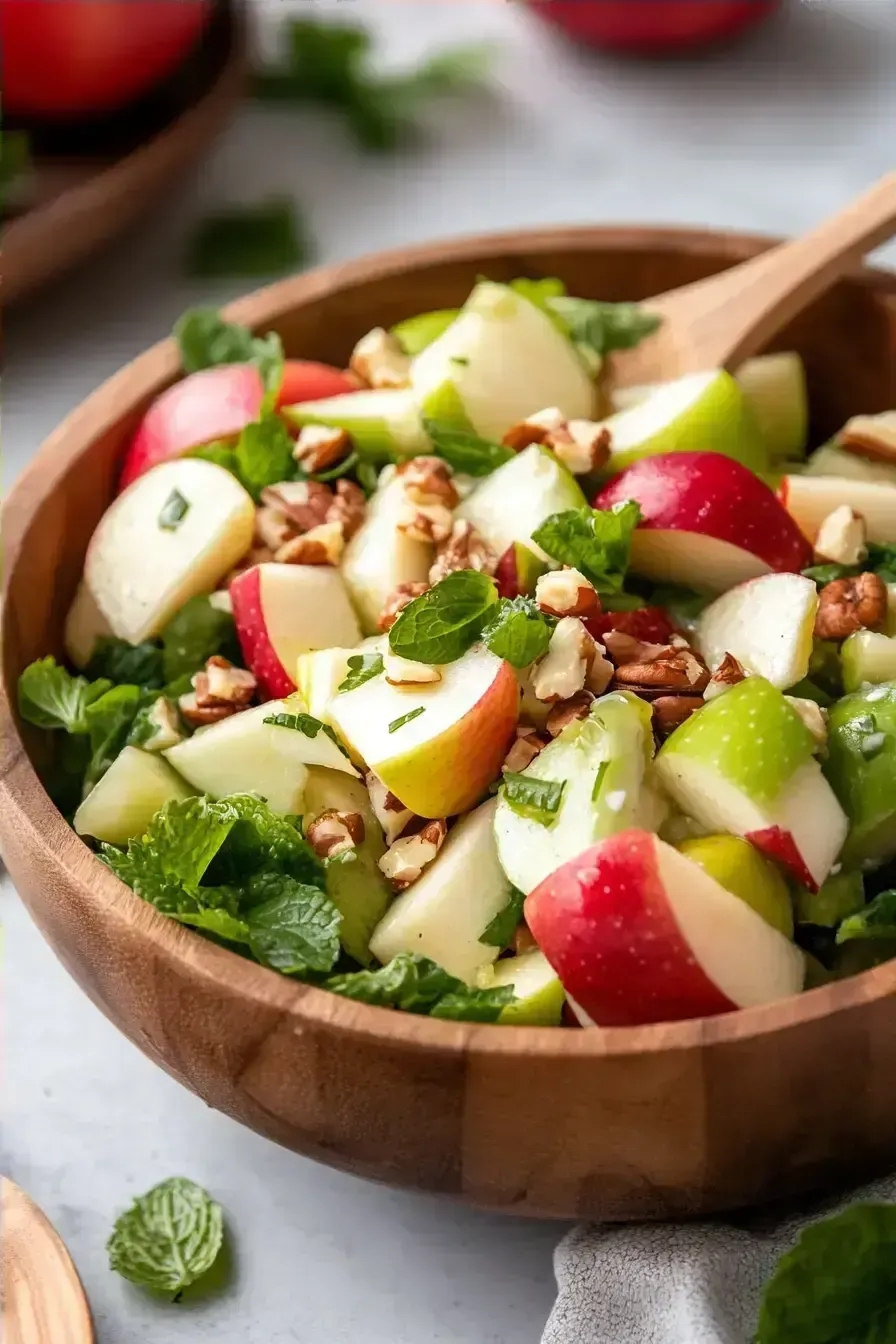
This Waldorf salad recipe is the kind of dish that feels like revisiting a cherished family memory, only easier, lighter, and better than ever. Built on crisp apples, juicy red grapes, crunchy toasted walnuts, and fresh celery, this classic apple walnut salad gets a modern upgrade with a creamy Greek yogurt dressing that keeps every bite bright, refreshing, and satisfying. Whether you’re serving it at a holiday table, bringing it to a potluck, or packing it for a weekday lunch, this is the best Waldorf salad recipe you’ll ever make, and it’s ready in just 20 minutes. For a savory protein salad, try this seafood salad recipe.
Why You’ll Love This Waldorf Salad
- Lighter Yogurt Dressing – Greek yogurt replaces heavy cream for a creamy, tangy, protein-rich Waldorf salad dressing that’s every bit as satisfying as the all-mayo original with noticeably fewer calories.
- Perfect Texture Contrast – Crisp apples, juicy grapes, crunchy toasted walnuts, and tender celery create a classic Waldorf salad that’s both refreshing and deeply satisfying in every single bite.
- Quick and No-Cook – This original Waldorf salad recipe comes together in just 20 minutes with zero cooking required, making it an ideal last-minute side for any occasion.
- Ideal for Make-Ahead – The flavors meld beautifully in the refrigerator overnight, making it one of the most meal-prep-friendly salads you can make.
- Naturally Gluten-Free and Vegetarian – As written, this salad suits a wide range of dietary needs, with easy swaps available for vegan, nut-free, and dairy-free diets.
Navigation
- Why You’ll Love This Waldorf Salad
- What is a Waldorf Salad?
- Waldorf Salad Ingredients
- How to Make Waldorf Salad: Step-by-Step
- Recipe Video Tutorial
- Waldorf Salad Variations and Customizations
- What to Serve with Waldorf Salad
- Expert Tips for the Best Waldorf Salad
- How to Store and Make Ahead
- Waldorf Salad FAQs
What is a Waldorf Salad?
A Waldorf salad is a classic American salad built from crisp apples, celery, walnuts, and a creamy dressing, celebrated for its irresistible combination of sweet, savory, and crunchy textures. It strikes a perfect balance that makes it equally at home as a quick weekday side or an elegant holiday centerpiece. The characteristics of the Waldorf salad that define it are its distinctive textural contrast, fresh fruitiness, and the rich, tangy creaminess of its dressing.
Today the salad shines in countless forms, from the faithful original Waldorf salad recipe to lighter Waldorf salad with yogurt versions, hearty chicken Waldorf salad variations, and fully plant-based takes. If you enjoy classic recipes reimagined with a lighter touch, my avocado chicken salad follows exactly the same philosophy.
The History of the Waldorf Salad
The Waldorf salad was created in 1893 by Oscar Tschirky, the legendary maitre d’hotel of the Waldorf-Astoria Hotel in New York City, reportedly for the hotel’s grand charity opening gala attended by over 1,500 guests from New York’s high society. The original Waldorf salad recipe, published in Oscar Tschirky’s 1896 cookbook, contained just three ingredients: diced apples, celery, and mayonnaise — no nuts, no grapes.
Walnuts became a standard addition by the 1920s, and halved red grapes followed shortly after, producing the beloved classic Waldorf salad we recognize today. Over 130 years later, it remains one of the most iconic and historically significant salads in American culinary history, inspiring countless modern variations around the world.
Waldorf Salad Ingredients
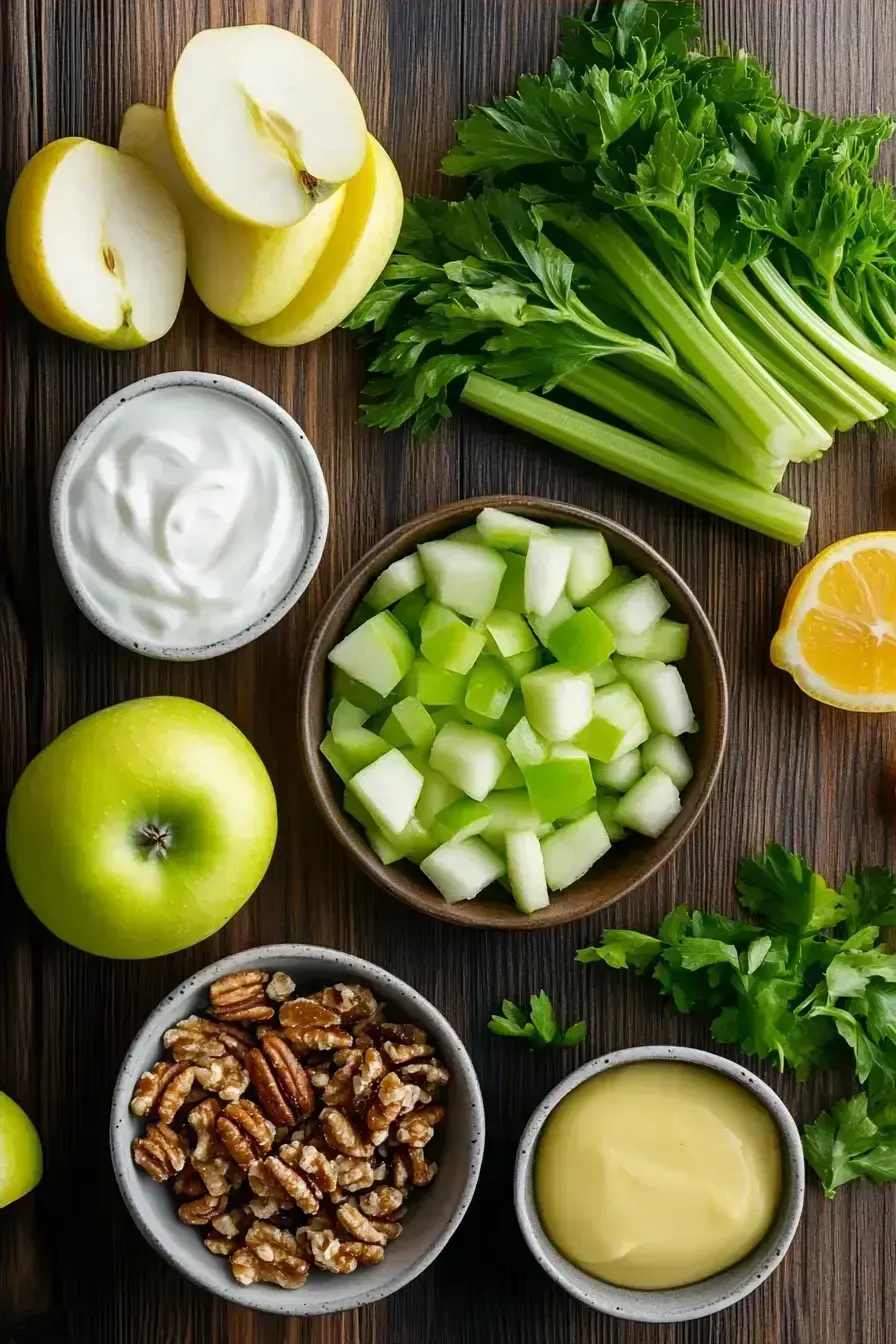
The beauty of this Waldorf salad recipe lies in its simplicity. Every ingredient plays a specific role in building the signature balance of sweet, crunchy, creamy, and fresh. Here is everything you need.
The Core Ingredients
- Apples – Choose crisp varieties like Honeycrisp or Granny Smith for the best texture and tartness. Using two apple varieties adds visual contrast and a more complex flavor that defines the best Waldorf salad recipe.
- Walnuts – Toasting them first in a dry skillet unlocks their rich, nutty flavor and eliminates bitterness. Pecans are a delicious substitute for a sweeter, buttery note.
- Red Grapes – Halved red grapes bring juicy sweetness and vibrant color that contrasts beautifully with the savory, crunchy elements. Use firm, fresh grapes for the best texture.
- Celery – Thinly sliced to provide that essential crunch without being stringy. Reserve the leafy tops for an elegant garnish.
- Fresh Flat-Leaf Parsley – Finely chopped for a pop of color and herby brightness that elevates the whole classic Waldorf salad without overpowering it.
Dressing Options: Classic Mayo vs. Healthy Yogurt
The traditional Waldorf salad dressing is pure mayonnaise, but the most popular modern upgrade is a blend of Greek yogurt and a small amount of mayo. This Waldorf salad with yogurt approach delivers the same richness and creaminess with added protein and a lighter calorie count. Here is what you need for each option:
- Greek Yogurt – The creamy, protein-rich base that makes this a healthy Waldorf salad. Use plain full-fat Greek yogurt for the best flavor.
- Mayonnaise – A small amount adds the classic richness and familiar Waldorf flavor profile. For a fully classic version, use mayonnaise only.
- Fresh Lemon Juice – Adds brightness, balances the sweetness of the grapes and honey, and crucially prevents the apples from browning.
- Honey – A natural sweetener that perfectly rounds out the tang of the yogurt and lemon.
- Salt and Black Pepper – Season generously to bring all the flavors together.
How to Make Waldorf Salad: Step-by-Step
This Waldorf salad recipe comes together in just 20 minutes with zero cooking required. Here is how to make it perfectly every time.
- Toast the walnuts. Heat a dry skillet over medium-low heat. Add the walnuts and toast for 4 to 5 minutes, stirring frequently, until fragrant and golden. Transfer to a plate and let cool completely.
- Make the dressing. In a small bowl, whisk together the Greek yogurt, mayonnaise, fresh lemon juice, honey, salt, and black pepper until completely smooth. Taste and adjust seasoning as needed.
- Prep the apples. Dice the apples into roughly half-inch pieces and immediately toss them with a squeeze of fresh lemon juice to prevent browning.
- Prep the remaining ingredients. Halve the red grapes, thinly slice the celery, and roughly chop the cooled toasted walnuts. Finely chop the fresh parsley.
- Combine. In a large mixing bowl, add the apples, grapes, celery, and parsley. Pour three-quarters of the dressing over the ingredients and gently fold everything together. Add more dressing as needed — you want a light, even coating, not a heavy soak.
- Chill. Cover the bowl and refrigerate for at least 30 minutes. This rest period is where the flavors meld and the salad reaches its full potential.
- Serve. Just before serving, fold in the toasted walnuts. Serve on a bed of butter lettuce leaves and garnish with reserved celery leaves and whole walnut halves.
For another no-cook recipe with the same effortless prep rhythm, my cucumber salad is a wonderful companion dish for any warm-weather meal or weeknight dinner spread.
Recipe Video Tutorial
Watch the step-by-step video below to see exactly how this classic Waldorf salad comes together in minutes, from toasting the walnuts to mixing the perfect creamy dressing.
[recipe-video]
Waldorf Salad Variations and Customizations
The beauty of this best Waldorf salad recipe is how easily it adapts to different tastes, diets, and occasions. Here are the three most popular and delicious variations worth trying.
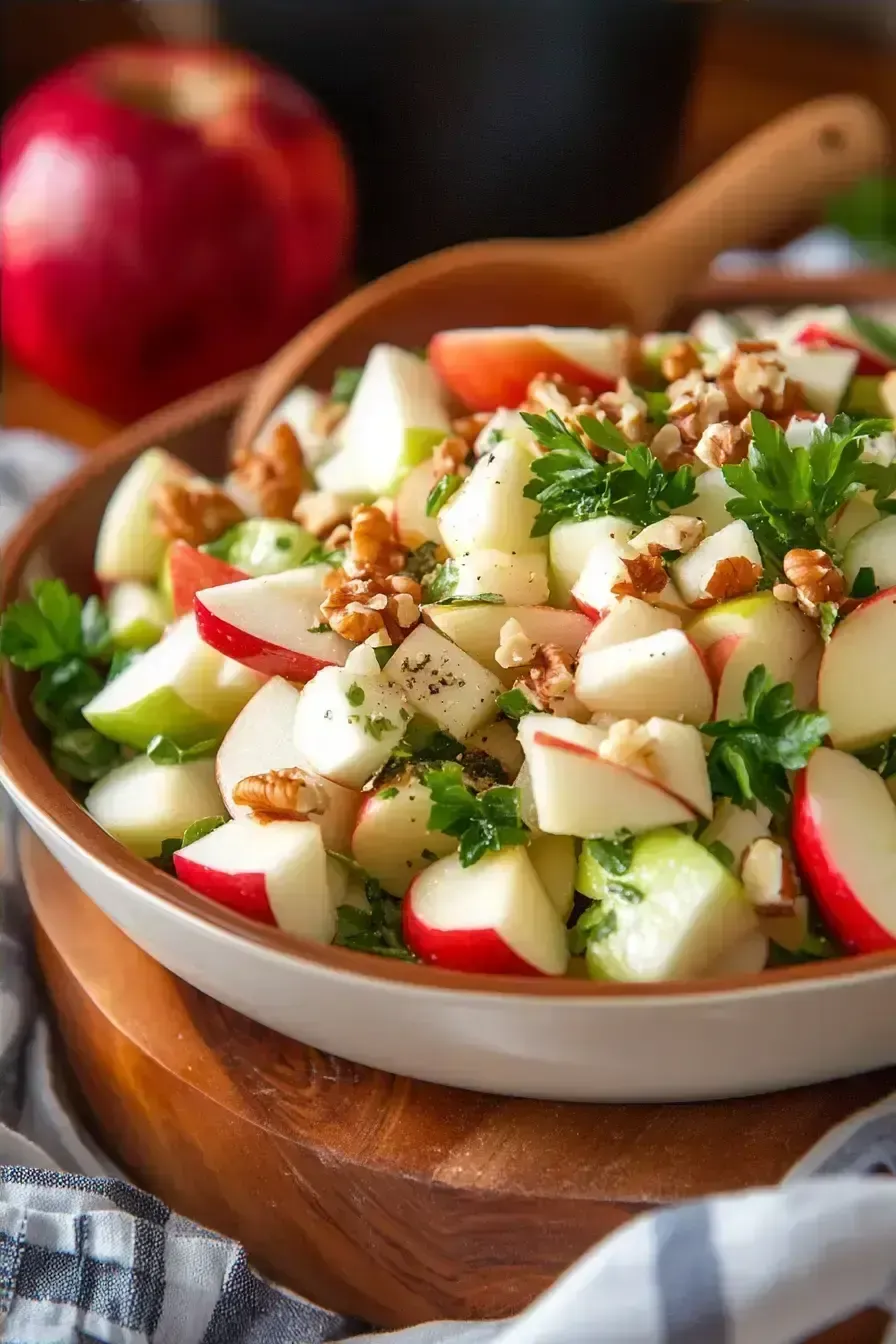
Chicken Waldorf Salad
The chicken Waldorf salad is the most popular variation and transforms this dish into a filling, protein-rich main course. Simply fold in 1.5 to 2 cups of shredded rotisserie chicken or diced poached chicken breast with the other ingredients before adding the dressing. The mild, savory chicken pairs beautifully with the sweet apples and tangy yogurt dressing, making it one of the most satisfying lunch options you can prepare.
It keeps well in the fridge for up to 3 days and is ideal for weekly meal prep. For another protein-packed make-ahead lunch, my chicken salad is a creamy, crowd-pleasing option that pairs wonderfully on sandwiches or wraps.
Healthy Waldorf Salad (Yogurt Dressing)
For a healthy Waldorf salad, replace all or half of the mayonnaise with plain Greek yogurt. The result is noticeably lighter and tangier, with a meaningful boost of protein and probiotics. Add a drizzle of honey and extra lemon zest to elevate the flavor without adding calories. This Waldorf salad with yogurt version is also the one used in this base recipe, making it the ideal everyday choice.
For those watching calories further, opt for low-fat Greek yogurt or Skyr, reduce the honey by half, and increase the proportion of Granny Smith apples (lower in sugar) versus sweeter varieties. My Mediterranean chickpea salad follows this same lighter, nutrition-forward philosophy and makes a great companion dish.
Vegan Waldorf Salad
Making a fully vegan Waldorf salad is simple: swap regular mayonnaise for a high-quality avocado oil-based vegan mayo, and replace the honey with maple syrup. Every other ingredient in this recipe is already plant-based, so the result is equally creamy, flavorful, and satisfying. For a nut-free version, substitute the walnuts with toasted sunflower seeds or pepitas, which provide very similar crunch and nutritional value without any allergen concerns.
For more plant-based lunch inspiration that shares this same fresh, satisfying approach, my vegan chickpea salad pitas are a brilliant high-fiber option perfect for meal prep days.
What to Serve with Waldorf Salad
One of the most common questions about this dish is what goes with a Waldorf salad for dinner. The answer is: almost everything. Its sweet-savory balance and creamy texture make it an extraordinarily versatile side dish that complements a wide range of mains and accompaniments.
- Roasted or grilled chicken – The classic pairing. The sweet fruit and creamy dressing balance the savory, smoky notes of grilled or herb-roasted chicken perfectly.
- Grilled turkey or holiday ham – An ideal Thanksgiving or Christmas side that holds up beautifully on a large spread alongside other dishes.
- Crusty artisan bread or whole wheat rolls – Perfect for soaking up any extra dressing and rounding out a light lunch.
- Soup – A bowl of creamy butternut squash or tomato soup alongside this salad makes for a cozy, complete meal.
- Grain-based salads – Serve alongside my orzo salad or a bulgur salad for a vibrant, satisfying shared table spread.
- Pita pockets or wraps – Stuff the Waldorf salad into whole wheat pita with a handful of arugula for a satisfying handheld lunch.
For a complete potluck or entertaining spread, pair this classic Waldorf salad with my potato salad and a simple grilled protein for an effortless, crowd-pleasing combination that covers every texture and flavor note.
Expert Tips for the Best Waldorf Salad
After making this Waldorf salad recipe dozens of times, a handful of techniques consistently make the difference between a good salad and a genuinely unforgettable one.
- Always toast your walnuts. A dry skillet over medium-low heat for 4 to 5 minutes releases the nuts’ natural oils and transforms their flavor from flat and raw to deeply nutty and aromatic. Let them cool completely before adding so they don’t wilt anything with residual heat.
- Dress the apples in lemon juice immediately. As soon as you dice the apples, toss them with fresh lemon juice. This single step prevents oxidation and keeps your classic Waldorf salad looking vibrant and appetizing for hours.
- Start with three-quarters of the dressing. Toss the salad, assess, then add more if needed. You want every ingredient evenly coated, not submerged. Over-dressing destroys the signature textural contrast that defines this dish.
- Chill for at least 30 minutes. This rest period is non-negotiable for flavor development. The apple juices, lemon, honey, and yogurt all come together into a cohesive, deeply flavored dressing during this time.
- Add walnuts just before serving if prepping ahead. Store the toasted walnuts separately and fold them in right before serving to keep their crunch completely intact.
- Use two apple varieties. Combining one sweet apple (Honeycrisp or Fuji) and one tart apple (Granny Smith) creates the most complex, layered flavor in your best Waldorf salad recipe.
- Taste your walnuts before using. Rancid walnuts carry a sharp, bitter flavor that will permeate the entire salad. Fresh walnuts should smell pleasantly nutty, never sharp or sour.
For more technique-driven tips where timing and precision create dramatic improvements, my authentic Greek salad applies the same careful, methodical approach to a classic. My Greek feta salad similarly demonstrates how small, precise techniques consistently elevate simple dishes to their highest potential.
How to Store and Make Ahead
One of the most practical virtues of this Waldorf salad recipe is how well it stores and how much it improves when made ahead. The flavors genuinely deepen overnight as the dressing permeates the fruit and the whole salad becomes more cohesive and richly flavored.
- Refrigerator: Transfer to an airtight container and press a piece of plastic wrap directly onto the surface of the salad before sealing the lid. This direct-contact layer minimizes air exposure and prevents apple browning. Stored this way, your classic Waldorf salad stays fresh and delicious for up to 3 days.
- Make-ahead tip: Prepare the full salad up to 24 hours in advance. Keep the toasted walnuts stored separately in a small container and fold them in fresh each time you serve to preserve their crunch completely.
- Freezer: This salad does not freeze well. The high water content in the apples, grapes, and celery causes them to become soft and watery upon thawing, which destroys the crisp texture that defines the dish.
- Food safety: The USDA Food Safety guidelines recommend keeping mayonnaise-dressed salads refrigerated at or below 40°F at all times and discarding any that have sat at room temperature for more than two hours.
For a longer-term apple and walnut treat, my apple walnut parfaits are a wonderful freezer-friendly alternative that celebrates the same core flavor combination.
Waldorf Salad FAQs
What’s in a traditional Waldorf salad?
The original Waldorf salad recipe from 1893 contained just three ingredients: diced apples, celery, and mayonnaise. The modern traditional version adds toasted walnuts and halved red grapes, which became standard Waldorf salad ingredients by the mid-20th century. Today’s classic Waldorf salad is almost universally served on butter lettuce with a creamy mayo or yogurt dressing, often garnished with fresh parsley.
What are the characteristics of the Waldorf salad?
The Waldorf salad is defined by its extraordinary combination of contrasting textures and flavors: crisp, firm apple provides sweet-tart crunch; juicy grapes deliver fresh sweetness and color; toasted walnuts contribute deep, rich nuttiness; and tender celery adds savory freshness. The Waldorf salad dressing, creamy and lightly tangy, ties every element together without overwhelming the natural brightness of the fruit. It is simultaneously refreshing, hearty, and elegant.
What goes with a Waldorf salad for dinner?
This Waldorf salad pairs perfectly with roasted chicken, grilled turkey, holiday ham, creamy soup, or crusty artisan bread. It is also substantial enough to serve as a light dinner on its own when piled onto butter lettuce or stuffed into whole wheat pita pockets. For a complete dinner spread, serve alongside my potato salad and a simple grilled protein for an effortless, crowd-pleasing meal.
What are the ingredients of Waldorf salad?
A classic Waldorf salad is made with crisp apples, celery, red grapes, and toasted walnuts, all tossed in a creamy dressing. The traditional Waldorf salad dressing is pure mayonnaise, but modern versions use a combination of Greek yogurt, mayonnaise, fresh lemon juice, and honey for a lighter, tangier result. Optional add-ins include fresh parsley, dried cranberries, raisins, or diced cooked chicken for a heartier chicken Waldorf salad.
Why is it called a Waldorf salad?
The Waldorf salad gets its name from the Waldorf-Astoria Hotel in New York City, where it was first created in 1893 by Oscar Tschirky, the hotel’s legendary maitre d’hotel. The original Waldorf salad recipe contained only three ingredients: apples, celery, and mayonnaise. Walnuts became a standard addition in the early 20th century, and grapes followed later.
What is a good substitute for mayonnaise in Waldorf salad?
The best mayonnaise substitutes in Waldorf salad are plain full-fat Greek yogurt, sour cream, or creme fraiche. Greek yogurt is the most popular modern swap and the one used in this recipe. For a fully vegan Waldorf salad, use a high-quality avocado oil-based vegan mayonnaise. Many recipes use a blend of Greek yogurt and a small amount of mayonnaise to get the best of both worlds.
What is a substitute for walnuts in Waldorf salad?
Pecans are the best walnut substitute in Waldorf Salad, sharing a similar texture but with a slightly sweeter, buttery flavor. For nut-free versions, toasted sunflower seeds or pepitas provide excellent crunch without any allergen concerns. You can also simply add extra celery if omitting nuts entirely.
Can I make Waldorf salad the day before?
Yes, and you absolutely should. This Waldorf salad recipe improves significantly when made a day ahead, as the flavors have time to fully meld together. Prepare everything up to 24 hours in advance, press plastic wrap directly onto the surface, and refrigerate in an airtight container. Store the toasted walnuts separately and fold them in just before serving to keep them perfectly crispy.
Which lettuce is best for Waldorf salad?
Butter lettuce and bibb lettuce are the best choices for serving Waldorf Salad, as their naturally cup-shaped leaves make perfect individual serving vessels. Romaine lettuce is an excellent alternative if you want more crunch. Avoid sharp or peppery greens like arugula, as they can overpower the delicate, balanced flavors of the classic Waldorf salad.
What fruit is often added to Waldorf salad?
The two core fruits in a classic Waldorf salad are crisp apples and halved red grapes. Popular additional fruits include dried cranberries (especially in holiday versions), raisins, sliced pears, dried apricots, Medjool dates, and pomegranate seeds for a festive variation.